Why the 3D Model Creation Process Is More Complex Than It Looks
Many clients ask a simple question: How long will it take to make the 3D model?
It is a fair question, but the answer is rarely simple. The 3D model creation process often looks easier from the outside than it truly is.
A project may seem small on paper—for example, a three-story building measuring 15m x 5m. At first glance, it sounds manageable and quick to complete.
However, the reality of the 3D model creation process is very different. Even compact projects require planning, precision, revisions, technical skill, and artistic judgment.
What appears small visually can involve many hours of highly detailed work behind the scenes.

Translating Drawings Into 3D Space
The first step in the 3D model creation process is understanding the architectural plans.
2D drawings must be accurately interpreted and transformed into a functional 3D environment. This means reading dimensions, elevations, sections, and layouts while ensuring nothing is missed.
This stage is not just technical conversion—it is also spatial communication.
Designers must understand:
- Structure and scale
- Flow of spaces
- Visual balance
- Exterior proportions
- Interior relationships
The 3D model creation process begins with precision because mistakes at this stage affect everything later.
Every Small Detail Matters
Another reason the 3D model creation process takes time is detailing.
Even a modest building may include:
- Windows and frames
- Railings and trims
- Doors and handles
- Lighting fixtures
- Roof details
- Façade textures
- Landscaping elements
Each feature must be modeled carefully and positioned correctly.
In professional software like Autodesk 3ds Max or SketchUp, realism depends on accuracy.
The 3D model creation process is often measured in hundreds of small decisions that viewers may never consciously notice—but they absolutely feel in the final render.
Revisions and Client Feedback
No professional 3D model creation process ends after the first draft.
Client collaboration is a major part of production. Feedback may involve:
- Material changes
- Design adjustments
- Camera angle requests
- Furniture layout updates
- Color corrections
- Lighting preferences
Every revision requires reworking parts of the scene, rerendering previews, and quality checking results.
This is why timelines can shift. The 3D model creation process is not only about creation—it is also about refinement.
Aesthetics Must Also Serve Purpose
A strong render is not just visually attractive.
Another critical part of the 3D model creation process is deciding how the design should be presented. This includes:
- Best camera angles
- Natural and artificial lighting
- Material realism
- Atmosphere and mood
- Clear storytelling of the design
The goal is not simply to model a building, but to communicate why the design matters.
This is where technical skill meets artistry.
Collaboration Across Multiple Teams
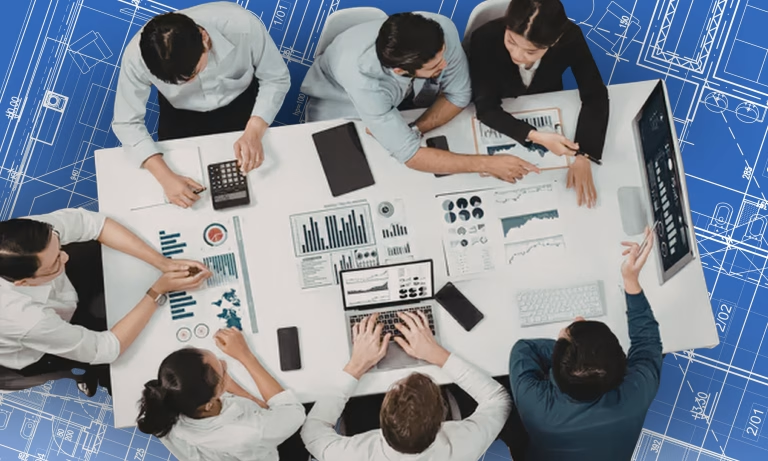
Many projects involve more than one stakeholder.
The 3D model creation process may require coordination with:
- Architects
- Interior designers
- Engineers
- Product suppliers
- Developers
- Marketing teams
Each party may request updates or provide new information.
Balancing creative intent with practical requirements adds another layer of complexity.
Why Small Projects Are Often Misunderstood
A common misconception is that a smaller building automatically means faster production.
But in the 3D model creation process, size does not always determine effort.
Small projects can still demand:
- High levels of detail
- Tight deadlines
- Frequent revisions
- Premium presentation quality
- Custom materials and staging
Sometimes smaller projects require just as much care because expectations remain high.

Conclusion: It Is Never Just a Model
The truth about the 3D model creation process is simple: it is never just a model.
Behind every polished render are hours of modeling, testing, adjusting, lighting, rendering, and refining.
What clients finally see is not just software output—it is craftsmanship, experience, and problem-solving.
At 2MC24/7, we create high-quality 3D visuals that help brands, architects, and developers communicate ideas with clarity and impact.
Explore our 3D visualization services: https://2mc247.com/
Because the best renders do more than look impressive—they make ideas understandable.