When people think about 3D rendering, the first thing that often comes to mind is realism. Sharp details, realistic lighting, accurate materials, and lifelike environments are typically considered the hallmarks of a successful render.
While realism is important, the true value of photorealistic rendering extends far beyond creating attractive images.
For architects, developers, furniture brands, manufacturers, and marketers, rendering is a communication tool that helps audiences understand ideas, evaluate options, and make decisions with confidence.
The most effective renderings do more than look real—they tell stories, build trust, and support business goals.
The Difference Between Realistic and Effective
A render can be technically impressive yet fail to achieve its purpose.
Photorealism alone does not guarantee success.
An effective rendering should help viewers:
Understand the design
Visualize the experience
Connect emotionally
Make informed decisions
This means that composition, storytelling, and strategic communication are just as important as realism.
The goal is not simply to create beautiful images but to create visuals that support specific outcomes.
Building Trust Through Visualization
Trust plays an important role in purchasing decisions.
Whether someone is buying a property, selecting furniture, or evaluating a product, they want confidence that what they see accurately reflects reality.
Photorealistic renderings help build trust by presenting:
Accurate materials
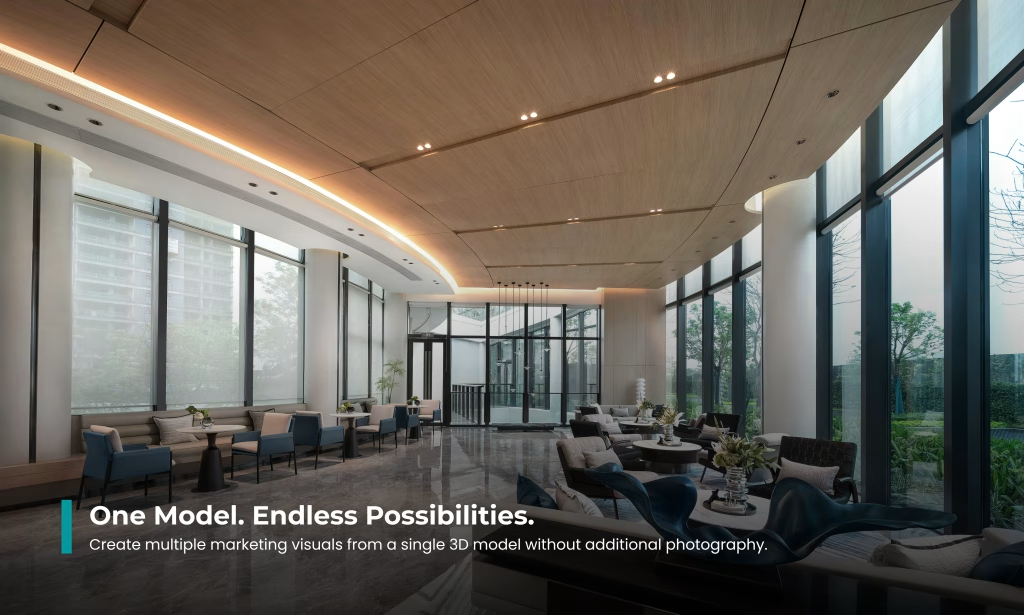
Realistic lighting
Correct proportions
Authentic details
The closer a visualization aligns with the final product or space, the easier it becomes for stakeholders to make decisions.
Communicating Design Intent
Architects and designers often work with complex concepts that can be difficult to explain through drawings alone.
Floor plans and technical documents provide important information, but they may not clearly communicate:
Atmosphere
Material choices
User experience
Design vision
Photorealistic renderings translate technical information into visuals that clients and stakeholders can understand immediately.
This reduces misunderstandings and improves communication throughout the project lifecycle.
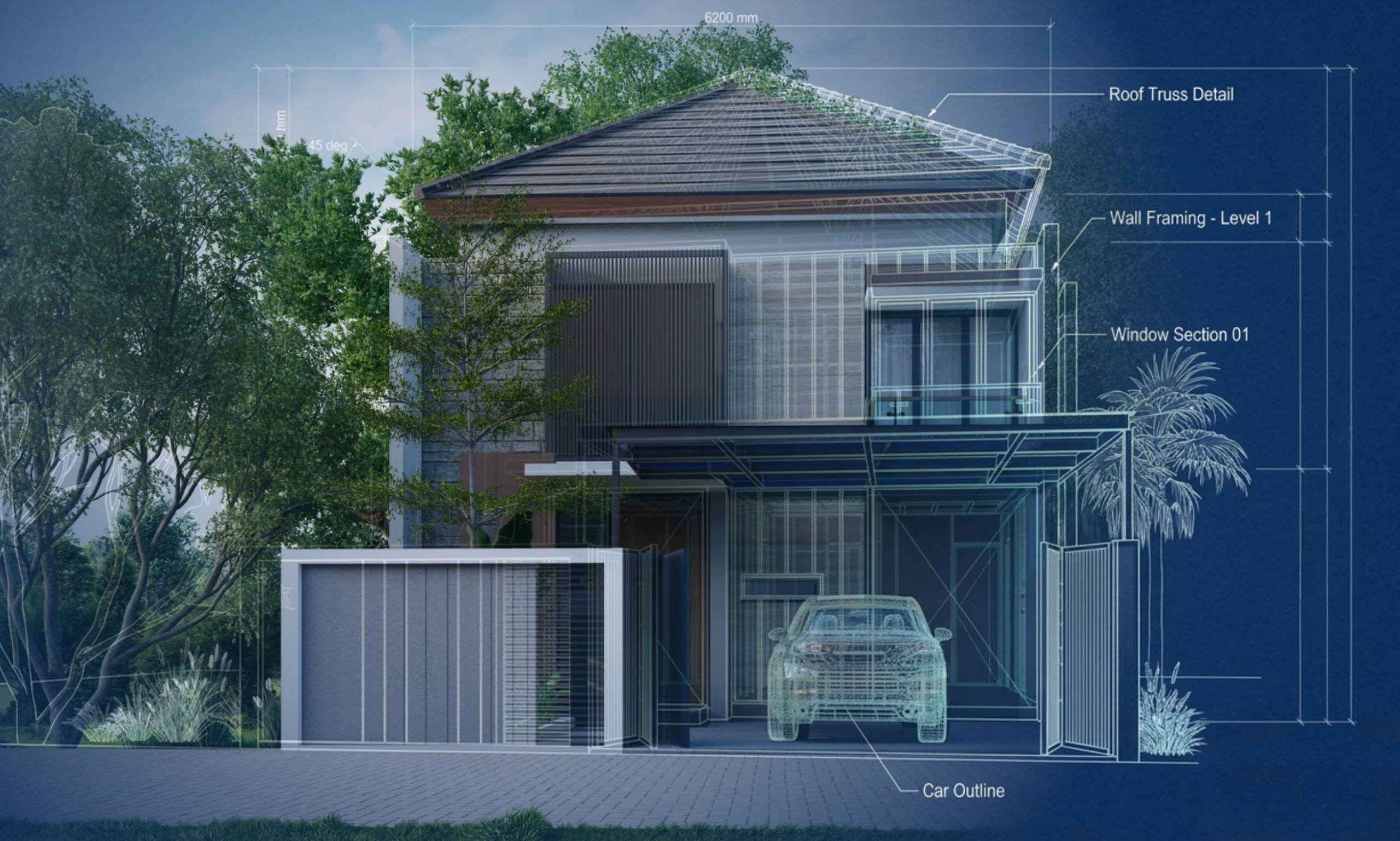
Many architects and visualization professionals use Autodesk software to create accurate 3D models that serve as the foundation for photorealistic rendering in architecture, product design, and manufacturing.
Supporting Marketing and Sales
Visual content plays a major role in attracting attention and generating interest.
Photorealistic renderings help marketing teams create:
Property listings
Advertising campaigns
Product launches
Social media content
Presentation materials
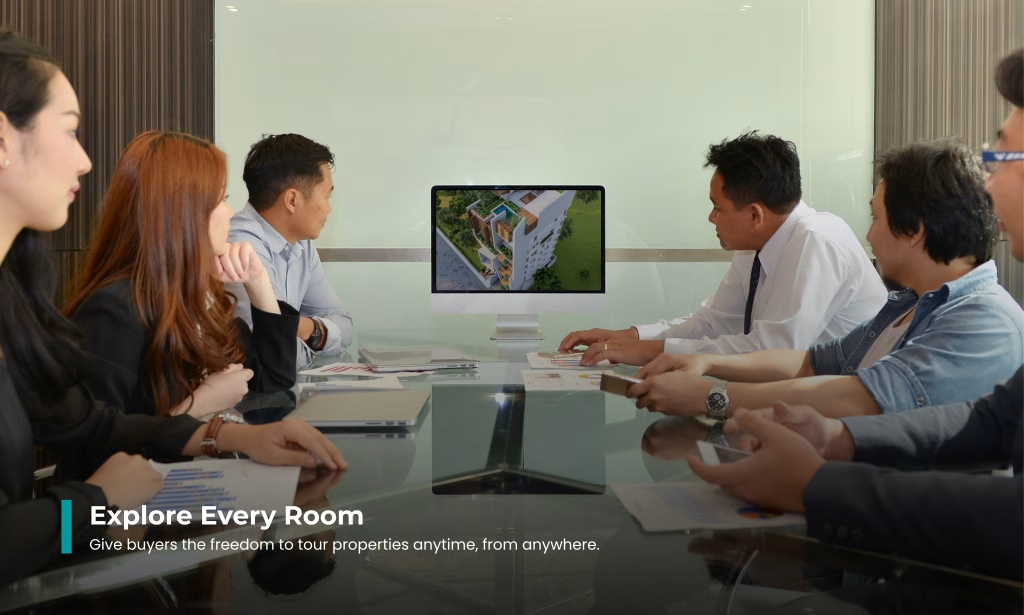
Because renderings can be created before construction or manufacturing is complete, they allow businesses to begin marketing earlier.
This provides valuable opportunities for lead generation and pre-sales.
Creating Emotional Connections
People rarely make decisions based solely on logic.
Emotion often plays an equally important role.
Effective renderings communicate more than specifications—they communicate lifestyle.
Through carefully designed scenes, viewers can imagine:
Living in a home
Working in an office
Relaxing in a resort
Using a product
This emotional connection can significantly influence purchasing behavior.
Why Details Matter
Small details often make the biggest difference.
Elements such as:
Lighting
Textures
Furniture placement
Landscaping
Human interaction
all contribute to creating believable and engaging visual experiences.
These details help transform a technical representation into a compelling story.
Beyond Presentation
Photorealistic renderings are valuable long before marketing begins.
They can support:
Design reviews
Client approvals
Material selection
Stakeholder communication
Project planning
By helping teams visualize outcomes early, renderings contribute to better decision-making and more efficient workflows.
The Business Value of Visualization
Ultimately, rendering is not just about aesthetics.
It is about solving business challenges.
Organizations use visualization to:
Improve communication
Accelerate approvals
Increase buyer confidence
Support marketing
Reduce revisions
Drive sales
These outcomes create measurable value that extends far beyond visual appeal.
Conclusion
Photorealistic rendering is much more than making images look realistic.
It is a powerful communication and marketing tool that helps businesses present ideas clearly, build trust, and create stronger connections with their audiences.
The most successful visualizations combine realism with strategy, storytelling, and purpose.
At 2MC 247, we create photorealistic renderings designed to do more than impress. Our visualization solutions help architects, developers, manufacturers, and brands communicate ideas effectively and achieve their business goals through high-quality visual storytelling.
Get a free ebook, ‘Exploring the Depths in 3D Animation,’ packed with valuable insights on how 3D animation can benefit your business. Grab your copy now—available
for a limited time!