
Understanding Traditional Product Photography
CGI vs Product Photography is one of the biggest debates facing modern ecommerce brands today. CGI vs Product Photography is one of the biggest decisions modern ecommerce brands face today. Product visuals have become one of the most important factors in online shopping.because customers cannot touch, test, or inspect products in person. Whether you’re selling furniture, home décor, consumer goods, or lifestyle products, the quality of your visuals can directly impact conversions, customer confidence, and brand perception.
For years, traditional product photography has been the standard approach. However, advancements in CGI (Computer-Generated Imagery) have given brands a powerful alternative that offers greater flexibility, scalability, and long-term value.
The question many businesses are asking today is simple: should you continue investing in traditional photography, or is CGI a better solution for your product marketing?
Traditional product photography involves capturing images of physical products using cameras, lighting equipment, photographers, and studio setups.
For many brands, photography remains an effective way to showcase products with authentic real-world details.
Benefits include:
• Capturing actual product textures and finishes
• Familiar production workflows
• Immediate use for websites and marketing materials
• Natural authenticity for lifestyle campaigns
However, photography also comes with limitations. Every product variation requires a separate shoot. New colors, materials, or product updates often mean additional costs, scheduling, and production time.
As product catalogs grow, these challenges become increasingly difficult to manage.
What Is CGI Product Rendering?
Understanding the differences between CGI vs Product Photography helps brands choose the right visual strategy for their products.
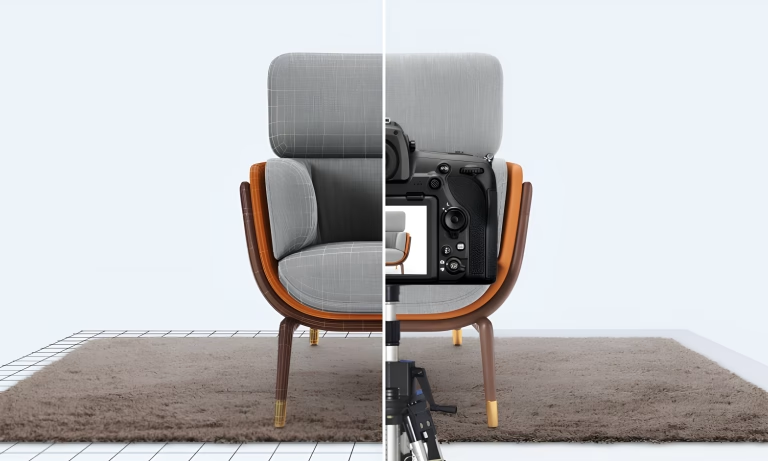
CGI product rendering uses 3D models to create photorealistic product visuals digitally.
Instead of photographing a physical item, designers build an accurate digital version of the product and apply realistic materials, lighting, and environments. The final result can be nearly indistinguishable from traditional photography.
CGI allows brands to create:
• Product images
• Lifestyle scenes
• Product animations
• 360-degree views
• Interactive experiences
• Marketing visuals for future products
Unlike photography, CGI does not require physical inventory to begin production.

CGI vs Product Photography: Comparing Cost and Scalability
When evaluating CGI vs Product Photography, cost is often one of the biggest deciding factors.
Photography costs typically include:
• Studio rental
• Photographer fees
• Equipment
• Product shipping
• Set design
• Retouching
These costs can increase significantly when multiple product variations are involved.
CGI requires an upfront investment in creating accurate 3D models. Once those assets exist, however, they can be reused repeatedly.
A single CGI model can generate:
• Multiple colors
• Different materials
• Various camera angles
• Seasonal campaigns
• Marketing content across channels
For brands with large product catalogs, this scalability often results in significant long-term savings.
Managing Product Variations More Efficiently
In the debate of CGI vs Product Photography, CGI offers significant advantages when managing large product catalogs and multiple variations.
One of the biggest challenges in ecommerce is presenting product options effectively.
Consider a furniture brand offering:
• Five sofa colors
• Three fabric options
• Two leg finishes
Traditional photography would require numerous image combinations to capture every variation.
With CGI, these variations can be created digitally from a single master model.
This flexibility allows brands to:
• Launch products faster
• Reduce production costs
• Keep catalogs up to date
• Respond quickly to market changes
For companies with extensive product lines, this advantage can dramatically improve operational efficiency.
Supporting Faster Product Launches
Another major advantage in CGI vs Product Photography is the ability to accelerate product launches without waiting for physical inventory.
Speed to market has become increasingly important.
Consumers expect new products, seasonal collections, and frequent updates.
Traditional photography often requires waiting for:
• Manufacturing
• Shipping
• Studio scheduling
• Post-production
CGI eliminates many of these delays.
Visuals can often be created while products are still in development, allowing marketing teams to prepare campaigns before inventory arrives. This helps brands generate excitement, secure pre-orders, and accelerate product launches.

CGI vs Product Photography for Brand Consistency
Brand consistency is critical for building trust.
Customers expect product images to look consistent across:
• Ecommerce websites
• Marketplaces
• Social media
• Catalogs
• Advertisements
Photography can introduce variations due to lighting conditions, equipment changes, and production environments.
CGI provides complete control over visual assets. Lighting, angles, materials, and environments can remain consistent across every product image.
This consistency strengthens brand identity and improves the customer experience.
When Traditional Product Photography Still Makes Sense
Despite the advantages of CGI, photography remains valuable in many situations.
Brands may prefer photography when:
• Authentic lifestyle imagery is required
• User-generated content is important
• Products contain unique handmade characteristics
• Real-world environments enhance storytelling
In many cases, photography and CGI work best together. Some brands use CGI for product catalogs and ecommerce listings while using photography for brand campaigns and social content.
Which Option Is Right for Your Brand?
Ultimately, choosing between CGI vs Product Photography depends on your business goals, budget, and long-term content strategy.
The answer depends on your goals.
Photography may be the right choice if:
• You have a small product catalog
• You need authentic lifestyle imagery
• Product variations are limited
CGI may be the better solution if:
• You offer multiple product variations
• You launch products frequently
• You need scalable content production
• Consistency is a priority
• You want reusable digital assets
Many leading brands now combine both approaches to maximize efficiency and creative flexibility.
Conclusion
When comparing CGI vs Product Photography, both approaches have an important place in modern ecommerce marketing.
Both CGI and traditional photography have a place in modern ecommerce marketing.
Photography delivers authenticity and familiar workflows, while CGI offers unmatched flexibility, scalability, and long-term value.
As product catalogs expand and content demands increase, many brands are turning to CGI as a strategic solution for creating high-quality visuals faster and more efficiently.
H2: Elevate Your Product Visuals with 2MC 247
At 2MC 247, we create photorealistic CGI product renderings that help brands showcase products with accuracy, consistency, and impact.
Whether you’re launching a new collection, expanding your catalog, or improving your ecommerce experience, our visualization team can help bring your products to life.
Contact 2MC 247 today to discover how CGI can transform your ecommerce marketing strategy.