Why 3D Modeling is Essential for Modern Businesses

3D modeling has transformed the landscape of product design and development, offering a leap from traditional two-dimensional sketches to realistic digital models that bring concepts to life. Beyond just visuals, 3D modeling provides intricate details about a product, helping designers identify and rectify potential flaws long before production begins.

But the advantages of 3D modeling extend far beyond the design stage. Here’s why 3D modeling is a crucial asset for businesses today:

Enhanced Product Realism and Physical Simulation

Advanced 3D modeling tools offer features that go beyond simple visualization, including realistic lighting, texturing, and shadow effects. By integrating geometric measurements and material properties, these tools can simulate how a product will react to various physical conditions. This capability allows businesses to gain an accurate representation of the product’s physical dimensions and performance, ensuring that designs are both functional and visually appealing before they hit the market.

Improved Communication and Collaboration in Complex Projects

In industries like architecture, engineering, and construction (AEC), clear communication and coordination are critical. 3D modeling bridges the gap between different stakeholders by providing detailed visualizations that reveal potential design conflicts early on. This proactive approach streamlines project workflows, allowing architects, engineers, and clients to align their visions and work more efficiently together.

Superior Visualization for Stakeholders

Unlike 2D drawings, 3D models offer a comprehensive view of a product from every angle, making it easier to assess even the smallest details. This capability is especially valuable when presenting ideas to investors or clients who may not have a technical background. A 3D model can communicate the design intent more effectively, helping stakeholders visualize the final product and how it fits into their needs or lifestyle.

Accelerated Design and Iteration Process

With the right 3D modeling tools, skilled designers can create digital prototypes much faster than traditional methods allow. Adjustments can be made quickly and easily, saving valuable time during the development process. This efficiency extends to the creation of physical prototypes as well, as 3D models can be directly used for 3D printing, allowing for rapid prototyping and quicker time-to-market.

Streamlined Project Documentation and Compliance

3D models serve as a central resource for maintaining detailed project documentation, ensuring that all designs meet industry standards and regulatory requirements. These digital models enhance transparency and accountability by providing a clear, detailed reference throughout the project’s lifecycle, from initial planning to final approval.

Cost-Effective Production and Marketing Tool

3D modeling not only speeds up the design process but also helps reduce operational costs. By allowing businesses to optimize designs for 3D printing, they can minimize material usage and waste, resulting in cost savings. Additionally, 3D models are powerful marketing tools, enabling companies to create interactive and engaging promotional materials even before the physical product is produced.

Fostering Collaboration and Innovation

Collaboration is at the heart of successful product development, and 3D modeling facilitates this by allowing team members to work together more effectively. Digital files can be easily shared and edited, promoting real-time collaboration among designers, engineers, and other stakeholders. This collaborative environment fosters innovation, helping businesses stay ahead of the competition by bringing new ideas to market faster.

A Versatile Tool Across Industries

The applications of 3D modeling are vast, spanning multiple industries such as:

  • Architecture and Engineering: Streamlining design and construction processes.
  • Advertising and Marketing: Creating immersive visuals for campaigns.
  • Healthcare: Visualizing medical devices and procedures.
  • Gaming and Entertainment: Developing realistic characters and environments.

No matter the industry, 3D modeling helps businesses stay competitive by enhancing product design, improving communication, and reducing time-to-market.

Partner with 2MC247 for Superior 3D Modeling

At 2MC247, we understand the importance of high-quality 3D modeling in today’s fast-paced business environment. Our team of skilled 3D modelers combines artistic talent with technical expertise to deliver exceptional results tailored to your specific needs. With nearly 15 years of experience in the industry, we have helped countless clients bring their visions to life with precision and creativity.

Whether you need detailed product models, immersive virtual environments, or interactive marketing visuals, 2MC247 is your trusted partner for all your 3D modeling needs. Contact us today to learn how we can help you stay ahead in the competitive market.

Exploring Advanced Applications of 3D Photomontage in Architectural Visualization

3D Photomontage has evolved beyond its basic role as a tool for merging renderings with photographs; it now encompasses various sophisticated techniques that serve specific functions in architectural visualization. These advanced applications make 3D photomontage an invaluable resource for architects, developers, and urban planners. Here, we delve into some of the more specialized uses of 3D photomontage that go beyond the typical scope.

1. Accurate Visual Representations (AVRs) for Planning and Development

One of the most significant applications of 3D photomontage is in creating Accurate Visual Representations (AVRs), which are crucial in Landscape and Visual Impact Assessments (LVIAs) and Townscape Visual Impact Assessments (TVIAs). These assessments require a highly accurate depiction of proposed developments within their real-world context to evaluate their potential visual impact.

AVRs can range from basic wireframe models showing the massing of a structure (AVR Level 0 or 1) to fully rendered images that incorporate detailed architectural elements and realistic lighting (AVR Level 3). These representations are often used in formal planning submissions, where precision and reproducibility are paramount, as they help stakeholders understand the full implications of a development on its surroundings.

2. Photomontage in Renewable Energy Projects

The use of 3D photomontage has expanded into sectors like renewable energy, particularly in the visualization of wind and solar farms. For instance, photomontages can simulate the visual impact of wind turbines or photovoltaic (PV) solar panels in a landscape, taking into account the curvature of the Earth, elevation data, and other geographic factors. This helps in assessing the visual intrusion of such projects from various viewpoints, which is critical for gaining community and regulatory approval.

The ability to accurately place and visualize these large-scale installations within real-world environments ensures that stakeholders can evaluate potential visual impacts before construction begins. The photomontages also often include detailed annotations and reports that are essential for environmental assessments.

3. Integration with Emerging Technologies

As technology continues to advance, so too does the potential of 3D photomontage. One notable trend is the integration of photomontage with Virtual Reality (VR) and Augmented Reality (AR) platforms. This allows users to explore proposed developments in an immersive 3D environment, where they can experience the design from multiple angles and under different lighting conditions.

Moreover, tools like SketchUp and specialized photomontage software now offer advanced calibration features that enhance the accuracy of these visualizations. These tools allow for the seamless integration of 3D models into panoramic images, providing a more comprehensive understanding of how a project will interact with its surroundings​.

4. Photomontage for Marketing and Stakeholder Engagement

Beyond its technical applications, 3D photomontage has become a powerful tool in marketing and stakeholder engagement. High-quality photomontages are often used to create compelling visuals for marketing materials, helping to convey the aesthetic appeal and practical benefits of a project to potential buyers and investors. These visuals are also crucial in presentations to local councils and community groups, where clear and persuasive imagery can make the difference between approval and rejection​.

By combining technical accuracy with visual appeal, photomontages serve as both a communication tool and a persuasive marketing asset. This dual function underscores the importance of mastering 3D photomontage techniques in the competitive fields of architecture and real estate development.

Transform Your Architectural Vision with Advanced 3D Photomontage Services

3D Photomontage is not just a technique; it’s an art that bridges the gap between imagination and reality. By seamlessly blending 3D renderings with real-life photographs, this process allows architects, designers, and developers to present their projects in the most realistic and engaging manner possible. At 2MC 24/7, we take pride in delivering high-quality 3D Photomontage rendering services that help our clients bring their architectural visions to life, ensuring every detail is captured with precision and artistry.

The Power of 3D Photomontage in Architectural Visualization

The value of 3D photomontage lies in its ability to provide a tangible sense of what a finished project will look like in its actual environment. Whether you’re showcasing an exterior view of a new residential building or integrating a new structure into an existing landscape, photomontages allow stakeholders to see how a project will interact with its surroundings. This realistic portrayal is critical not only for client approvals but also for gaining community support and securing investments.

Key Advantages of 3D Photomontage:

  • Enhanced Realism: By combining high-quality 3D models with real-world photography, photomontages create a compelling, lifelike visualization that standard renderings can’t achieve. The careful alignment of perspective, lighting, and materials ensures that the final image is as close to reality as possible.
  • Accurate Site Representation: A successful 3D photomontage begins with an in-depth site analysis. This involves collecting data on the environment, topography, and lighting conditions to accurately place the 3D model within the photographic context. Such detailed integration is essential for conveying the true impact of the project.
  • Effective Communication: Photomontages serve as a powerful communication tool. They help architects and designers articulate their vision clearly, making complex designs easily understandable for clients, investors, and regulatory bodies. This visual clarity can significantly influence decision-making processes, leading to faster approvals and more enthusiastic buy-in from all parties involved.
  • Cost-Efficient Visualization: Compared to creating entirely new 3D environments, integrating 3D models into existing photographs can be more cost-effective and faster to produce. This efficiency makes photomontages an attractive option for projects with tight budgets and timelines.

Comprehensive 3D Photomontage Services at 2MC 24/7

At 2MC 24/7, our suite of 3D Photomontage services is designed to cater to a wide range of architectural visualization needs:

  • Photorealistic Rendering: We create photorealistic 3D models that are meticulously integrated with site photographs to produce stunning, true-to-life visuals.
  • Architectural Master Plans: Our team excels in rendering comprehensive architectural master plans that provide a clear and detailed overview of proposed developments.
  • Exterior and Interior Photomontages: Whether you’re looking to visualize the exterior of a new residential complex or the interior of a commercial space, our photomontages offer a realistic preview that can be crucial for design and planning decisions.
  • Vacation Homes and Specialized Projects: We also specialize in creating photomontage renderings for vacation homes, including beachside apartments and other specialized architectural projects.

The Future of 3D Photomontage: Embracing Innovation

As technology continues to evolve, the future of 3D photomontage promises even greater advancements. Emerging tools like virtual reality (VR) and augmented reality (AR) are set to revolutionize the way we experience architectural visualizations, allowing users to immerse themselves fully in a 3D environment. Moreover, there is a growing trend towards incorporating real-time data, such as weather conditions or environmental impact factors, into photomontages, enhancing their accuracy and relevance even further.

At 2MC 24/7, we are committed to staying at the forefront of these developments, ensuring that our clients benefit from the latest innovations in 3D visualization. By continuously refining our techniques and expanding our capabilities, we strive to deliver results that not only meet but exceed expectations.

Ready to bring your architectural vision to life? Contact us today to discover how our expert 3D Photomontage services can help you create compelling, lifelike visuals that stand out in a competitive market. Let’s collaborate to make your project shine!

5 Essential Strategies to Boost Your Video’s Visibility in Search

Every day, more than 3.7 million videos are uploaded to YouTube. This staggering number underscores the growing demand for video content, a trend that shows no sign of slowing down. However, many content creators and website owners face a frustrating challenge: their videos simply don’t appear in search results.

Are your videos getting lost in the sea of content? Are you wondering if Google is somehow overlooking them? You’re not alone. In this blog post, we’ll tackle these concerns head-on and share five essential strategies to not only increase your video’s visibility but also improve its ranking in video search results.

Let’s dive in!

  1. Develop a Precise Video Sitemap

Search engines like Google and Bing are flooded with millions of videos, making it crucial for you to ensure your videos are easily navigable. One effective way to achieve this is by creating a dedicated video sitemap. A video sitemap serves as a roadmap for search engines, indicating that your pages contain video content that might otherwise go unnoticed by standard crawling systems.

Google tends to favor results from dedicated video pages and video-centric websites in its search engine results pages (SERPs). By setting up a video sitemap, you signal to Google that your content is video-based, improving the chances of it being indexed and ranked. Make sure your sitemap includes essential metadata such as keywords, titles, durations, and descriptions to further enhance your video’s search visibility.

  1. Share Your Videos on Third-Party Platforms

Posting your videos on popular third-party platforms like YouTube and DailyMotion is another excellent way to boost their visibility. These platforms have a massive user base, providing an opportunity to reach a wider audience. By establishing a strong presence on these platforms, you make it easier for users to find and engage with your video content.

Additionally, platforms like Vimeo and Wistia offer more premium, niche-targeted options for content creators looking to reach a specific audience. While these platforms may require a financial investment, they can be ideal for building a dedicated community of followers who are more likely to engage with and share your content.

  1. Optimize Your Video Thumbnail and Copy

Your video’s thumbnail and accompanying text play a critical role in attracting clicks, which in turn can help your video rank higher in search results. An eye-catching thumbnail is essential—it should be visually appealing and closely related to the content of the video. A compelling thumbnail can entice users to click on your video, increasing its click-through rate (CTR) and improving its chances of being featured as a snippet in search results.

When it comes to the title and description, ensure they include relevant keywords. Use tools like the YouTube Keywords Tool to find trending and niche-specific terms that can help your video stand out. Additionally, consider adding a transcription file with SEO-friendly timestamps. Subtitles not only enhance accessibility but also provide search engines with more data to index, improving your video’s overall visibility.

  1. Create a Dedicated Video Page on Your Website

Google often highlights results from dedicated video pages in its rich snippets. By creating a separate page on your website that focuses solely on video content, you increase the likelihood of your videos being featured prominently in search results. This approach is more effective than embedding videos on long-form content pages, which used to be a common practice.

To maximize the impact of a dedicated video page, ensure the video is the central focus and is placed at the top of the page. You can then embed this video on other relevant pages such as product pages, blog posts, or landing pages, but the primary video page should remain the main source.

  1. Monitor and Improve Average Watch Time

The average watch time of your videos is a crucial metric that search engines use to determine their ranking. Videos with higher average watch times are more likely to be promoted by both search engines and video hosting platforms. Aim for at least 50% average watch time, ensuring viewers are engaged enough to watch your video until the end.

Improving your video’s watch time often comes down to the quality of the content, pacing, and storytelling. If you’re struggling to keep viewers engaged, consider working with a professional video production service. These experts can help you craft videos that captivate audiences from start to finish, using techniques like cliffhangers to keep viewers hooked.

Bonus: Understanding How Google Ranks Videos

To wrap things up, it’s essential to understand how Google determines when to show videos in search results. Google’s algorithms are constantly evolving, becoming more responsive to user search behavior. The search intent, keyword use, and content type all influence whether videos appear in the results.

For instance, if users frequently modify their search queries to include words like “videos” or “reels,” Google is more likely to display video results. Similarly, if a keyword is associated with a high volume of video content, Google will prioritize video results to satisfy user intent. Finally, videos that have a high dwell time—meaning users spend more time watching them—are more likely to be ranked higher in SERPs.

Conclusion

Increasing the visibility of your videos in search results requires a strategic approach. By implementing the five strategies outlined above—creating a precise video sitemap, sharing videos on third-party platforms, optimizing thumbnails and copy, establishing a dedicated video page, and improving watch time—you can significantly enhance your video’s chances of being seen by your target audience.

Remember, the key to success in video SEO lies in understanding both the technical and creative aspects of video production. By focusing on quality, relevance, and user engagement, you can ensure your videos not only appear in search results but also rank highly, driving more traffic and engagement to your content.

Ready to take your video content to the next level? Contact us today to learn how our professional video services can help you optimize your videos for maximum visibility and impact. Let’s make your videos stand out!

The Evolution and Future of Motion Design: A 2025 Perspective

Motion design has undergone a remarkable transformation over the past few years, evolving from simple GIFs to intricate three-dimensional animations. This journey has been heavily influenced by pop culture, with designers constantly pushing the limits of what’s possible. As we step into 2025, it’s clear that motion design is not just about aesthetics; it’s about creating experiences that engage, entertain, and evoke emotions.

Major Motion Design Trends from 2018

Seamless Transitions Take Center Stage In 2018, there was a noticeable shift towards using seamless transitions in both film and motion graphics. Rather than relying on abrupt cuts, designers started integrating transitions that flowed naturally with the overall design. This approach added a layer of sophistication, making the transitions feel like a deliberate part of the storytelling rather than a necessary edit.

The Ubiquity of GIFs GIFs, though not new, continued to dominate in 2018. Their popularity surged as more platforms embraced them, making GIFs a staple in online communication. Designers and brands leveraged this format to create quick, impactful visuals that resonated with audiences across the internet.

kinetic typography 5

The Rise of Cinemagraphs By 2019, brands were eager to stand out in a saturated market dominated by video content and animated memes. Cinemagraphs emerged as a creative solution—a blend of still photography and subtle, looping animations. This unique format captivated audiences with its eerie, otherworldly effect, leading major brands like Apple and Nike to experiment with it.

ezgif.com resize


A Nostalgic Return to Retro 2019 saw a resurgence of retro-inspired designs, fueled by the popularity of nostalgic pop culture phenomena like “Stranger Things.” This trend brought back retro colors, typography, and icons, reminding audiences of the charm and character of past decades.

animated motion graphics
Motion Design Trends from 2020

Breaking Boundaries with 3D Design In 2020, 3D design became a powerful tool for designers, enabling them to create scenes that would have been impossible with traditional methods. For instance, Apple’s announcement video for the Apple Watch Series 4 offered an immersive experience by taking viewers inside the watch, showcasing the intricate hardware through stunning 3D effects.

Enhancing Experiences with Visual Effects (VFX) Visual effects became a go-to for creating epic, dramatized representations of products, particularly in commercials. The ability to exaggerate details, as seen in Adidas’ stylized shoe commercials, allowed brands to craft visually compelling narratives that resonated with viewers.

What to Expect in 2025

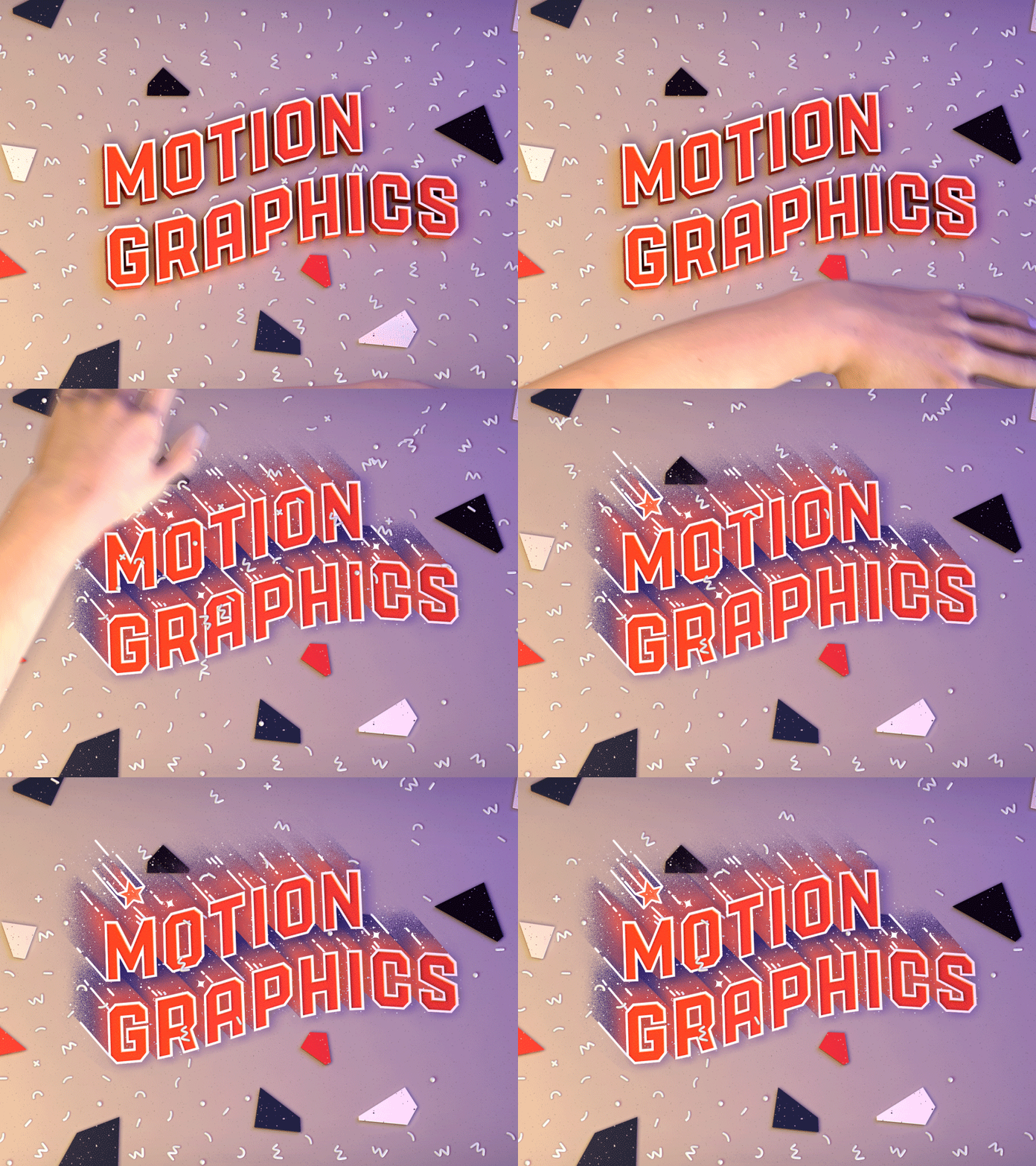
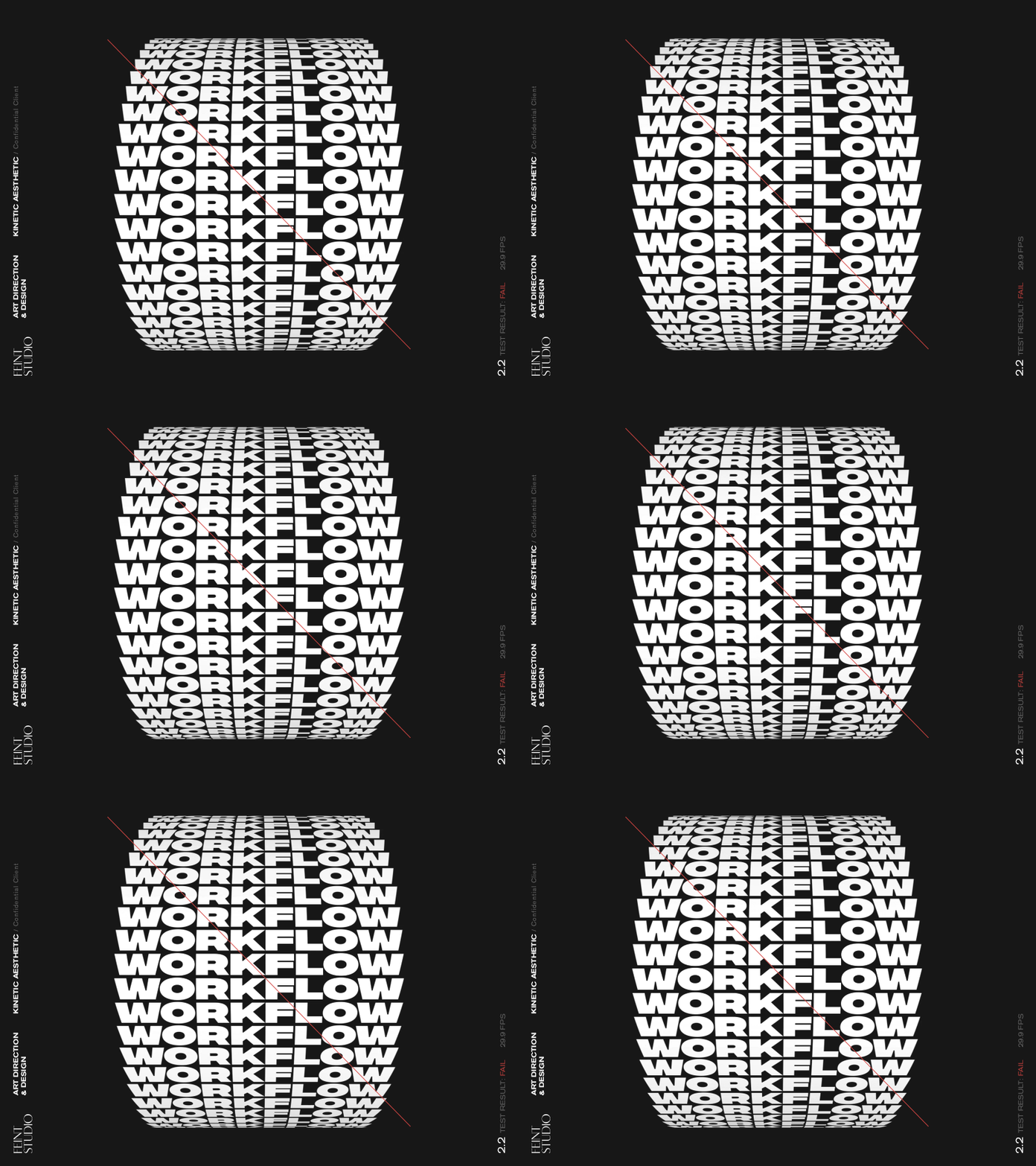
Kinetic Typography Takes the Lead As we move into 2025, kinetic typography has gained significant traction. This dynamic use of text in motion design has become a favorite in commercials, websites, and music videos, offering a fresh way to capture attention and convey messages.

kinetic typography 1
The Appeal of Grain Effects While clean, crisp designs have their place, the grain effect has become increasingly popular for adding texture and relatability to visuals. This technique helps to soften otherwise sterile designs, making them feel more authentic and engaging.
bike animation
The Future of Motion Design

Embracing Storytelling In the coming years, storytelling will be crucial in helping brands stand out. While playful GIFs have enjoyed popularity on social media, there’s a growing recognition of the power of storytelling in building deeper connections with audiences. Motion design is perfectly suited for this, using animation and movement to bring stories to life in a way that static images simply cannot.

Design as a Business Driver The connection between good design and business success is becoming more evident. As studies and reports continue to highlight the financial impact of design, more businesses will begin to see it as an essential part of their strategy. Designers will be empowered to make data-driven decisions, optimizing their work to contribute meaningfully to the bottom line.

image7
Whatever motion design looks like in the future, one thing is certain: it will continue to evolve, break boundaries, and challenge our perceptions, ensuring that it remains a vital part of the visual landscape.

Exploring the Future of Immersive Advertising: Augmented Reality’s New Frontier

In the evolving landscape of digital marketing, augmented reality (AR) is emerging as a powerful tool for creating deeply engaging advertising experiences. Unlike traditional ads, which often passively deliver messages to audiences, AR ads invite users to interact with brands in innovative ways, blending the digital and physical worlds. This shift is not just about keeping up with trends—it’s about redefining how brands connect with consumers. Let’s explore how different types of AR ads are transforming the advertising space.

Enhancing Consumer Interaction with AR-Driven Shopping Experiences

One of the most promising applications of AR in advertising is enhancing the online shopping experience. Imagine being able to try on a pair of shoes, a watch, or even a jacket without ever leaving your home. AR-driven try-on experiences allow users to see how products will look on them in real-time, using their device’s camera. This technology empowers consumers to make more informed decisions, reducing the guesswork and uncertainty that often accompanies online shopping.

The ability to virtually try on products not only enhances the shopping experience but also increases consumer confidence. When customers can see exactly how a product will look on them, they’re more likely to follow through with a purchase. Brands that implement these interactive tools can offer a personalized shopping journey that meets the evolving demands of today’s consumers.

Gamification: A New Way to Engage

Another exciting development in AR advertising is the rise of gamified experiences. These interactive ads go beyond simple displays of information—they turn advertising into a game that consumers can play. By incorporating elements of gaming, brands can create memorable interactions that entertain while promoting their products.

The benefits of gamification in advertising are clear. Users are more likely to engage with an ad that offers a fun and rewarding experience, leading to longer interaction times and stronger brand recall. Additionally, these experiences are often shared across social networks, extending the ad’s reach organically. For brands, this means greater exposure and a more positive association with their products.

Seamless Integration with Markerless AR

Markerless AR ads represent another leap forward in immersive advertising. These ads integrate digital content into the real world without the need for physical markers or codes. This allows for a more fluid and natural interaction between the user and the augmented environment.

Markerless AR can be used to create experiences that are contextually relevant, responding to the user’s surroundings in real-time. This technology offers brands an unprecedented level of creative freedom, enabling them to design ads that are both engaging and unobtrusive. By seamlessly blending digital elements with the physical world, markerless AR ads provide a unique and memorable user experience.

Precision Targeting with Marker-Based AR

For brands looking to combine the physical and digital worlds, marker-based AR ads offer a powerful solution. These ads are triggered by scanning specific images or objects in the real world, such as a product label or a billboard, with an AR-enabled device. This approach allows brands to deliver highly targeted content that enhances traditional marketing materials.

Marker-based AR ads are particularly effective for creating interactive product packaging or enhancing print advertisements. By offering additional digital content, such as product tutorials or promotional offers, brands can create a deeper connection with their audience. This type of advertising not only boosts engagement but also provides a seamless bridge between offline and online marketing efforts.

Amplifying Social Media Engagement with AR Filters

AR filters have quickly become a popular tool for brands looking to enhance their social media presence. These filters allow users to overlay branded elements onto their photos and videos, creating personalized content that can be easily shared across platforms. The interactive nature of AR filters encourages users to engage with the brand in a fun and creative way.

The viral potential of AR filters is significant. When users share their creations with their networks, they effectively become brand ambassadors, extending the ad’s reach far beyond its initial audience. For brands, this means increased visibility and a more organic connection with potential customers.

Virtual Exploration with AR Teleportation Ads

AR teleportation ads offer a unique way for brands to transport users to different locations and environments without leaving their current surroundings. This type of advertising is particularly well-suited for industries like travel and tourism, where showcasing destinations is key.

By overlaying virtual environments onto the real world, AR teleportation ads create an immersive experience that can spark interest and inspire action. Whether it’s exploring a far-off destination or getting a preview of a hotel, these ads offer a powerful way to engage potential customers and bring them closer to making a purchase decision.

The Future of AR in Advertising

As augmented reality technology continues to evolve, its applications in advertising will only expand. The key to success in this space lies in understanding the unique opportunities AR presents and leveraging them to create engaging, meaningful experiences for consumers. By embracing the potential of AR, brands can not only stay ahead of the curve but also redefine the way they interact with their audiences in the digital age.

The Benefits of Generative AI in Augmented Reality Advertising

Generative AI is revolutionizing the way businesses approach augmented reality (AR) advertising, offering a range of benefits that enhance the effectiveness of digital marketing campaigns. By combining the power of AI with the immersive capabilities of AR, advertisers can create highly personalized and engaging experiences that resonate with diverse audiences. In this blog, we explore the key benefits of leveraging generative AI in AR advertising.

  1. Personalized and Targeted Ad Experiences

One of the most significant benefits of generative AI in AR advertising is its ability to create highly personalized ad content. By analyzing user data such as preferences, behaviors, and demographics, generative AI algorithms can tailor ad creatives to match the unique interests of individual users. This level of personalization not only enhances user engagement but also ensures that AR ads are inclusive and relevant to a wide range of audiences.

Personalized AR ads can lead to more meaningful interactions between brands and consumers, ultimately driving higher engagement rates and improving the overall effectiveness of advertising campaigns.

  1. Flexibility and Experimentation

Generative AI introduces a new level of flexibility in AR advertising by allowing advertisers to experiment with different variations of ad creatives easily. This experimentation is crucial for identifying what resonates best with target audiences. By testing multiple versions of an ad, advertisers can fine-tune their campaigns, continuously optimizing them for maximum impact.

This iterative approach enables advertisers to adapt quickly to changing consumer preferences, ensuring that their AR ads remain fresh and engaging over time.

  1. Cost-Effective Content Creation

Another key benefit of generative AI in AR advertising is its cost-effectiveness. Generative AI can autonomously generate customized and engaging ad content, significantly reducing the time and resources needed for content creation. Tasks like image editing, video production, and graphic design can be automated, streamlining the advertising workflow.

By freeing up valuable time and resources, advertisers can focus on strategic aspects of their campaigns, such as audience targeting and campaign management, leading to more efficient and cost-effective advertising efforts.

  1. Enhanced User Engagement

Generative AI empowers advertisers to craft highly dynamic and personalized AR ads that captivate users. These ads are more likely to resonate with the target audience, resulting in higher click-through rates and increased brand interaction. The immersive nature of AR, combined with the personalized touch of generative AI, creates an engaging user experience that leaves a lasting impression.

This heightened level of engagement not only drives immediate results but also fosters long-term brand loyalty and customer retention.

  1. Data-Driven Insights for Continuous Improvement

Generative AI also provides advertisers with powerful tools for analyzing ad performance and gathering data-driven insights. By tracking metrics such as click-through rates (CTR), session duration, and user interactions, advertisers can gain a deeper understanding of what works and what doesn’t in their AR campaigns.

These insights enable continuous improvement and refinement of advertising strategies, ensuring that campaigns evolve and remain effective over time. This data-backed decision-making process leads to better results and a higher return on investment (ROI) for AR advertising efforts.

Conclusion

The integration of generative AI into augmented reality advertising offers a multitude of benefits that are transforming the digital marketing landscape. From personalized ad experiences and cost-effective content creation to enhanced user engagement and data-driven insights, generative AI is unlocking new possibilities for brands to connect with their audiences in meaningful and impactful ways.

As the potential of generative AI in AR advertising continues to unfold, advertisers are poised to create unforgettable brand experiences that will shape the future of advertising. Embrace this powerful combination today and elevate your digital marketing strategies to new heights.

Ready to harness the benefits of generative AI in your AR advertising campaigns? Contact us today to learn how our cutting-edge solutions can help you create personalized, engaging, and effective ads that captivate your audience and drive results.

The Transformative Power of 3D Product Configurators and Product Selectors in E-Commerce

In the rapidly evolving world of e-commerce, staying ahead of the competition means offering customers an experience that is not only seamless but also engaging. One of the most effective ways to achieve this is through the use of 3D Product Configurators and Product Selectors. These tools are revolutionizing the way customers interact with online products, enhancing their purchasing experience and boosting sales for retailers.

The Role of 3D Product Configurators in E-Commerce

A 3D Product Configurator is a powerful tool that allows customers to visualize and customize products in real-time. This level of interaction goes far beyond what traditional 2D images or even videos can offer. With a 3D Product Configurator, customers can view a product from every angle, zoom in to inspect details, and make adjustments to various attributes, such as color, material, or size, to suit their preferences.

The impact of this technology on purchasing decisions cannot be overstated. By giving customers the ability to personalize products and see exactly what they are getting, 3D Configurators build confidence and reduce the likelihood of returns. This is particularly beneficial for B2C e-commerce, where shoppers often rely on visuals to make informed decisions.

The Importance of Product Selectors

While 3D Configurators focus on customization, Product Selectors guide customers through the process of finding the right product in the first place. In a vast e-commerce catalog, it can be overwhelming for customers to identify the item that best meets their needs. A well-designed Product Selector simplifies this process by filtering options based on specific criteria, such as price, features, or intended use.

For example, a customer shopping for a new laptop might use a Product Selector to narrow down choices based on budget, processor type, and screen size. This tool streamlines the decision-making process, helping customers quickly and easily find the product that best suits their needs.

Applications of 3D Product Configurators in B2B and B2C

Both B2B and B2C retailers stand to gain significantly from implementing 3D Product Configurators. In the B2B space, these tools can provide a detailed view of complex products, allowing buyers to explore features and customize specifications before making a purchase. This is especially useful for products that require precise configurations, as it reduces the back-and-forth communication often associated with B2B transactions.

In the B2C sector, 3D Product Configurators serve as virtual try-on tools, enabling customers to experiment with different product variations, such as colors, materials, and sizes. This interactive experience not only makes shopping more enjoyable but also leads to more confident purchasing decisions, ultimately reducing return rates.

3D Product Configurators vs. 2D Configurators

While both 2D and 3D Product Configurators offer customization options, the difference in user experience is significant. A 2D Configurator allows customers to swap out one characteristic at a time, such as changing the color of an item. However, it lacks the depth and realism that a 3D Configurator provides. With a 3D Configurator, customers can stack multiple customizations simultaneously and view the product from a 360-degree perspective, offering a more comprehensive and immersive experience.

Though 3D Configurators may come with higher costs and technical requirements, the added value in terms of visualization and customer engagement far outweighs these challenges. The ability to rotate, zoom, and view a product from different angles makes 3D Configurators a superior choice for retailers looking to offer a cutting-edge shopping experience.

Key Considerations When Choosing a 3D Product Configurator

Implementing a 3D Product Configurator requires careful consideration to ensure it meets the needs of your e-commerce site. Here are some critical factors to keep in mind:

  • App vs. Browser-Based: Decide whether you want a configurator that requires customers to download an app or one that operates seamlessly within a web browser. Browser-based configurators are typically more user-friendly, as they do not require additional software.
  • Loading Speed: 3D models can be resource-intensive, leading to longer loading times. Choose a configurator that optimizes performance with compressed images and low polygon models to ensure a smooth user experience.
  • Customization Options: Look for a configurator that offers a wide range of customization parameters, allowing customers to adjust real-time aspects like color, material, texture, and size.
  • Real-Time Dynamic Pricing: Ensure that your configurator provides real-time updates on pricing as customers make adjustments to their selections. This transparency is crucial for building trust and ensuring a positive shopping experience.
  • Augmented Reality (AR) Elements: To further enhance the shopping experience, consider integrating AR elements that allow customers to visualize products in their own environment, such as viewing a customized piece of furniture in their living room.

The Bottom Line: The FACT of 3D Product Configurators’ Impact

It’s a fact that 3D Product Configurators and Product Selectors are transforming the e-commerce landscape. By providing an immersive, interactive, and personalized shopping experience, these tools not only enhance customer satisfaction but also drive sales and reduce returns. As online shopping continues to evolve, the adoption of advanced configurators will become increasingly essential for retailers looking to maintain a competitive edge.

At 2MC 24/7, we specialize in developing and implementing cutting-edge 3D visualization solutions tailored to your business needs. Whether you’re in the B2B or B2C sector, our expertise can help you create an e-commerce experience that not only meets but exceeds your customers’ expectations.

Embrace the future of e-commerce with 3D Product Configurators and Product Selectors—because providing an exceptional customer experience is not just an option, it’s a fact.

The Benefits of 3D Visualization in Product Marketing: How It Transforms Your Digital Strategy

In today’s fast-paced digital world, standing out is crucial, especially for businesses in the textile and fabric industries. With the shift from physical stores to online shopping, the demand for exceptional visual content has never been higher. To meet this demand, many companies are turning to 3D visualization as a key component of their product marketing strategies.

This innovative technology offers numerous advantages that can revolutionize how products are presented online. Let’s explore the key benefits of utilizing 3D visualization for your product marketing.

  1. Superior Product Visualization

When it comes to marketing textile products, showcasing the material’s quality, texture, and design is paramount. Effective imagery should convey all essential details about the product at a glance, making it easier for customers to make informed purchasing decisions.

3D visualization allows for various types of imagery, each tailored to highlight different aspects of the product:

  • Isolated Product Shots: Present the product against a clean, white background for a polished, professional look.
  • Detailed Close-Ups: Highlight the fabric’s texture, patterns, and intricate details, as if the customer is viewing it in person.
  • Lifestyle Images: Show the product in realistic settings, such as upholstery, curtains, or carpets, to give customers context on how it will look in their homes.
  • Color Variants: Display the product in multiple color options, allowing customers to compare and choose their preferred shade.
  • Flat-Lay Images: Provide an overhead view of the fabric laid out, showcasing the entire design.

By integrating 3D visualization, businesses can create visually striking and highly detailed images that grab customers’ attention and provide more information than traditional photography.

  1. Cost and Time Savings

One of the most significant benefits of 3D visualization is its potential to reduce both costs and time. Traditional product photography involves organizing photoshoots, creating physical prototypes, and coordinating logistics, all of which can be expensive and time-consuming.

In contrast, 3D visualization eliminates the need for physical samples. Skilled 3D artists can digitally recreate both the product and its environment, allowing for faster production and quicker time-to-market. This efficiency not only reduces costs but also enables businesses to respond rapidly to market trends.

  1. Customization and Personalization

3D visualization offers unparalleled customization capabilities. Designers can easily modify materials, colors, and textures, providing endless design possibilities. This flexibility allows customers to explore different product options and choose the one that best suits their needs.

Personalization also plays a crucial role in customer satisfaction. When customers can tailor products to their preferences, they feel a stronger emotional connection to the brand. This connection can lead to higher satisfaction rates and increased sales, making customization a powerful tool in product marketing.

  1. Enhanced Marketing and Sales Tools

Beyond static images, 3D visualization can introduce interactive elements that elevate your online storefront. For instance, 360-degree views of products allow customers to explore items from every angle, offering a more immersive shopping experience.

Brands can also develop augmented reality (AR) apps, enabling customers to visualize products in their own space using their smartphones. These interactive features capture attention and drive higher engagement, leading to better conversion rates and increased sales.

  1. Sustainable and Eco-Friendly Marketing

Sustainability is an increasingly important factor for consumers. 3D visualization supports eco-friendly practices by reducing the need for physical prototypes, thus minimizing material waste and carbon emissions.

By adopting digital methods like 3D visualization, brands can reduce their environmental impact and appeal to environmentally conscious consumers. This commitment to sustainability not only enhances brand reputation but also fosters customer loyalty.

Conclusion

3D visualization offers a range of benefits that can significantly enhance your product marketing efforts. From creating stunning, detailed visuals to reducing costs and supporting sustainable practices, this technology is a game-changer for businesses looking to improve their digital presence.

If you’re ready to take your product marketing to the next level, consider incorporating 3D visualization into your strategy. At 2MC 24/7, we specialize in providing high-quality 3D modeling and visualization services that are both effective and affordable. Contact us today to learn how we can help you transform your digital content and boost your business.

Don’t miss out on the benefits of 3D visualization for your product marketing. Contact 2MC 24/7 now to discover how our expert services can help you create compelling visuals that captivate your customers and drive sales.

FACT: How a Product Selector and Configurator Can Revolutionize Your E-Commerce Experience

In the ever-competitive landscape of e-commerce, driving traffic to your website is just the first step. The real challenge lies in converting visitors into satisfied customers, and that often hinges on one crucial element: the ease of the purchasing process. It’s a fact that consumers are creatures of habit, naturally gravitating towards the path of least resistance. They choose the fastest route to work, opt for the shortest line at the store, and, most importantly for online retailers, they favor websites where they can find and purchase products with minimal effort.

So, how can you make it easy for your customers to find the right product out of potentially hundreds of thousands of options, especially if they don’t know the exact part number or product name? The answer lies in implementing a robust Product Selector and Configurator system. These tools are no longer just a luxury for large-scale enterprises—they are a necessity for any e-commerce business aiming to provide a seamless and user-friendly shopping experience.

The Power of a Product Selector

Imagine this: a potential customer visits your website looking for a specific product, but they aren’t quite sure what it’s called or which version they need. Without a guiding tool, this situation could easily lead to frustration, abandoned carts, and lost sales. Enter the Product Selector—a wizard-like tool that guides users through a series of options, filtering out irrelevant products and honing in on the perfect match.

Think about the effectiveness of CarMax’s online tool, where you input preferences such as price range, vehicle type, and color. The system then narrows down the options, often introducing potential buyers to brands and models they hadn’t previously considered. This type of intuitive guidance not only makes the purchasing process more efficient but also increases the likelihood of customers discovering new products, ultimately boosting sales.

Configurator: Tailoring Products to Your Customers’ Needs

A Configurator takes the Product Selector concept a step further by allowing customers to customize their chosen product to their exact specifications. Whether it’s selecting the color, size, features, or even the packaging, a Configurator empowers customers to tailor products to their personal preferences, creating a more engaging and interactive shopping experience.

Consider the impact of this on your sales. When customers can personalize a product, they feel a stronger connection to it. This emotional investment can be a significant driver of purchase decisions. Furthermore, a well-designed Configurator can suggest additional features or complementary products, increasing the overall value of the sale. For example, a customer selecting a new laptop might be prompted to add a matching case, an extended warranty, or specialized software—items they might not have considered without the Configurator’s suggestions.

The Bottom Line: Why You Need a Product Selector and Configurator

The fact is, in today’s digital age, customers expect more from their online shopping experience. They want ease, speed, and personalization—all of which can be delivered through a well-executed Product Selector and Configurator. These tools not only make it easier for customers to find and purchase products but also enhance their overall shopping experience, leading to higher satisfaction, repeat business, and increased sales.

If you’re ready to transform your e-commerce platform into a user-friendly, sales-driving powerhouse, consider investing in a Product Selector and Configurator. Let us at 2MC 24/7 show you how these tools can revolutionize your business, helping you to not only meet but exceed your customers’ expectations. With nearly 15 years of experience in 3D visualization and e-commerce solutions, we have the expertise to develop custom solutions tailored to your specific needs.

Don’t let your customers get lost in a sea of options. Guide them with precision and personalization—because the easier you make it for them to find and buy what they need, the more successful your business will be. That’s a fact.