Explanation: The Power of 3D Furniture Renderings in Product Configurators

In the ever-evolving world of e-commerce, the way we interact with products is constantly changing. One of the most significant advancements in this space is the use of product configurators, especially in the realm of 3D furniture renderings. But what exactly is a product configurator, and how does it enhance the online shopping experience? Let’s dive into the details. 

The Evolution of Product Display 

Traditionally, purchasing furniture required a visit to a physical store, where customers could see and feel the products before making a decision. This experience is crucial for many, as it helps them envision how the furniture will look in their own spaces. However, with the advent of 3D models and product configurators, this visual experience is no longer confined to physical stores. 

The Role of 3D Furniture Renderings 

3D furniture renderings are highly detailed digital models that allow customers to view products from every angle. This technology bridges the gap between the tactile experience of in-store shopping and the convenience of online shopping. With 3D renderings, customers can explore products in a virtual space, examining textures, colors, and details as if they were physically present. 
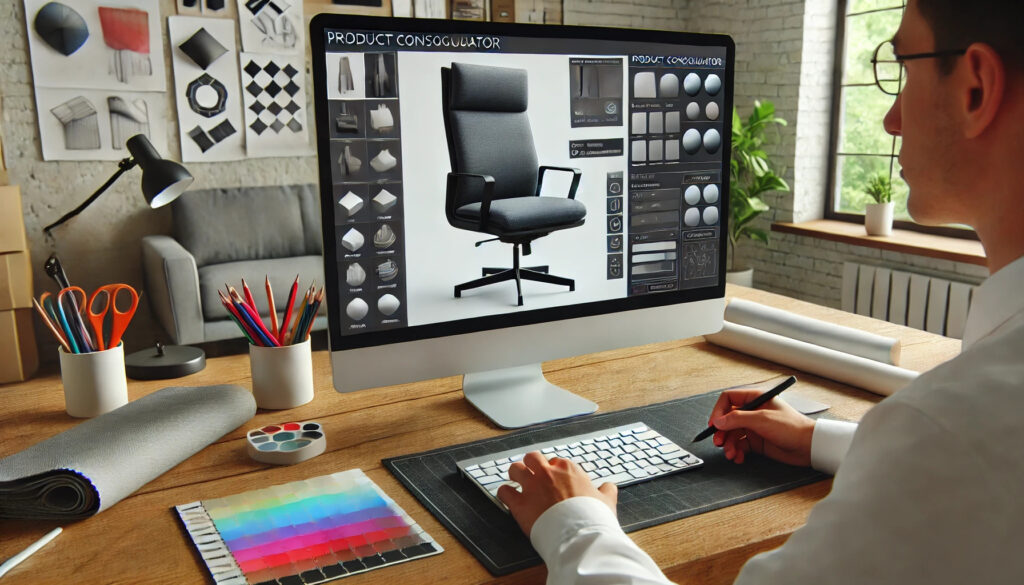
DALL·E 2024 06 26 02.50.59 A designer working on a desktop computer with a 3D product configurator interface open showing a customizable office chair. The screen displays vario

Introducing the Product Configurator 

A product configurator is a tool that allows customers to customize and visualize products according to their preferences. In the context of furniture retail, this means that customers can modify aspects such as color, material, and style, and instantly see these changes reflected in the 3D model. 

Enhancing the Customer Experience 

The benefits of using a product configurator with 3D furniture renderings are numerous: 

  1. Personalization: Customers can tailor products to their exact needs and tastes, creating a unique shopping experience. 
  2. Convenience: Instead of relying on shop assistants to show different models and colors, customers can explore all options with just a few clicks. 
  3. Visualization: Seeing a customized product in a 3D rendering helps customers make more informed decisions, reducing the likelihood of returns and increasing satisfaction. 
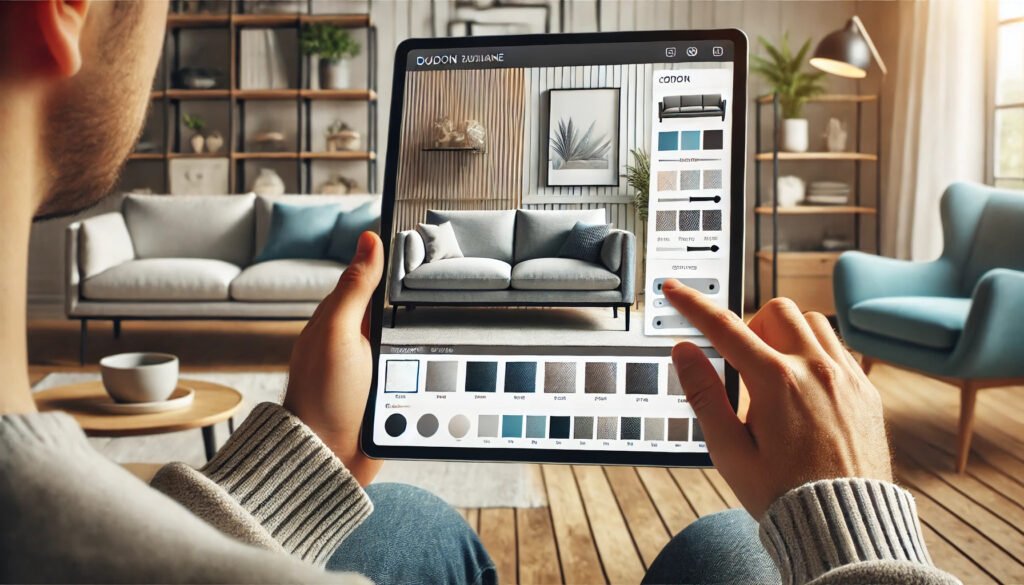
DALL·E 2024 06 26 02.48.13 A person using a tablet to customize a 3D model of a modern sofa in a virtual product configurator. The tablet screen shows various options for colors

Bringing the Showroom Home 

By enabling 3D product configurators, online shops can replicate the in-store experience and even surpass it. Shoppers can configure products from the comfort of their homes, turning what was once a potentially exhausting trip to the furniture store into a relaxed, enjoyable activity. Imagine browsing through different sofa models, changing colors and fabrics, all while sipping your favorite beverage on your couch. 

DALL·E 2024 06 26 02.48.15 An online furniture store website displayed on a laptop screen showing a 3D product configurator for a dining table. The screen displays options to c

The Future of E-Commerce 

The integration of 3D furniture renderings with product configurators is not just a trend but a significant step forward in e-commerce. This technology offers an immersive and interactive shopping experience that physical stores can’t match. As more retailers adopt these tools, we can expect to see a shift in how people shop for furniture and other customizable products. 

Conclusion 

In summary, 3D furniture renderings and product configurators are revolutionizing the way we shop. They combine the best aspects of in-store and online shopping, providing a highly personalized and convenient experience. As this technology continues to evolve, it will undoubtedly become a standard feature in the e-commerce landscape. 

So, the next time you’re considering new furniture, remember that with a product configurator and 3D renderings, the perfect piece is just a few clicks away. 


Affordable 3D Product Rendering Services: Boost Your Business with Configurators and Visualizers

3d Product Rendering Services

In today’s competitive market, providing an exceptional customer experience is crucial for any manufacturer. One of the most effective ways to achieve this is by integrating 3D product configurators and visualizers into your website. These tools not only enhance the customer journey but also streamline internal processes, leading to significant cost savings. In this blog, we’ll explore the benefits of these technologies and explain why 2MC 24/7 is the best choice for creating affordable configurators for your business. 

Introduction 

3D product configurators and visualizers have revolutionized the way customers interact with products online. These tools allow users to customize products in real-time, providing an interactive and immersive shopping experience. By offering a visual representation of the customized product, businesses can significantly improve customer satisfaction and boost sales. Let’s delve into the key benefits of using these tools and why 2MC 24/7 should be your go-to partner for affordable 3D product rendering services. 

  1. Cutting Costs in Sales, Engineering, and Manufacturing

Implementing a 3D product configurator can lead to substantial cost reductions across various departments. Sales teams will spend less time on transactional calls and more on closing deals or focusing on strategic accounts. Engineering departments can avoid the repetitive task of creating new CAD drawings for each customization, as customers can visualize and adjust their products instantly. Moreover, manufacturing processes benefit from accurate, clear, and concise parts lists, bills of manufacture, and assembly instructions, speeding up production and minimizing material waste and errors. 

  1. Boosting Customer Satisfaction and Confidence

Customers appreciate the ability to see a product before making a purchase, especially when they can customize it to their exact specifications. This immediate feedback on appearance, pricing, and ordering options eliminates the need for multiple interactions and reduces the chances of losing customers to competitors. Even when sales involvement is necessary, visual configurators simplify the process and ensure that the final product is feasible for production. Automatically generated images and CAD drawings further streamline the workflow, reducing the burden on engineering teams. 

  1. Reducing Order Cycle Times

By using a 3D product configurator, businesses can significantly shorten order cycle times. CPQ (Configure, Price, Quote) software integrated with configurators ensures that quote and order data seamlessly flows into other systems. Automated product renderings and manufacturing instructions expedite the production process, enhancing efficiency and clarity on the shop floor. This streamlined approach minimizes back-and-forth communications and manual editing, allowing for faster order fulfillment. 

  1. Increasing Sales Transactions and Revenue

Simplifying the ordering process with a 3D product configurator can lead to increased sales transactions and revenue. Sales and engineering teams no longer need to handle constant change requests or quote adjustments, as customers can make changes on the fly. This efficiency allows businesses to scale their operations without adding more sales staff. A well-tuned CPQ system can enable 80% of orders to be configured and placed without salesperson assistance, leaving only the most complex cases for direct sales intervention. 

  1. Enhancing Average Deal Size

3D visual configurators help customers envision real-world applications of products, making it easier for them to see the value of additional options. This ability to self-discover solutions leads to natural upselling, where customers choose premium features or add-ons that genuinely benefit them. The result is an increase in average deal size, as customers are willing to invest more in products that precisely meet their needs. 

Why Choose 2MC 24/7 for Affordable Configurators? 

At 2MC 24/7, we specialize in creating affordable, high-quality 3D product configurators and visualizers tailored to your business needs. Our team of experts ensures that the configurators are seamlessly integrated into your website, providing a smooth and engaging user experience. By choosing 2MC 24/7, you benefit from: 

  • Affordability: We offer competitive pricing without compromising on quality, making it accessible for businesses of all sizes to implement cutting-edge configurators. 
  • Expertise: With nearly 15 years in the industry, our experience speaks for itself. 
  • Efficiency: Our configurators streamline your processes, reduce costs, and enhance customer satisfaction, leading to higher sales and revenue. 
  • Customization: We tailor our solutions to fit your specific requirements, ensuring that the configurator aligns with your brand and product offerings. 

Conclusion 

Integrating 3D product configurators and visualizers into your website is a game-changer for manufacturers looking to enhance customer experience and streamline operations. These tools offer numerous benefits, from cost savings to increased sales and customer satisfaction. By partnering with 2MC 24/7, you can achieve these advantages affordably and effectively. Contact us today to learn more about our 3D product rendering services and how we can help you transform your business. 

Ready to take your business to the next level with affordable 3D product configurators and visualizers? Get in touch with 2MC 24/7 today and let us help you create a seamless and engaging customer experience. Visit our website or contact our team to get started! 

Perspective: The Future of Furniture Renderings

In a world where digital technology continues to transform our daily lives, the way we shop for furniture is also evolving. Imagine being able to thoroughly inspect a piece of furniture from the comfort of your home, without the need to visit a showroom. This is now possible with the advent of 3D visualization technology. But how does this technology work, and what impact will it have on the future of e-commerce, especially in the realm of furniture renderings? 

DALL·E 2024 06 26 02.38.47 An interior designer showing a client a 3D rendering of a bedroom on a large screen. The screen displays a highly detailed and realistic 3D model of t

A New Era in E-Commerce

E-commerce is a dynamic and rapidly evolving market. The internet’s vast information flow ensures constant innovation, with new trends emerging frequently. It can be challenging to keep up and discern what innovations are here to stay. Experts agree: one of the most promising trends within digital commerce today is 3D product visualization, particularly in furniture renderings. 

DALL·E 2024 06 26 02.38.27 A person using a laptop to design a 3D model of a modern dining table. The laptop screen displays a detailed 3D rendering software interface with the

What is 3D Visualization

3D visualization involves creating three-dimensional models of products, allowing customers to view and interact with these models from every conceivable angle. Unlike traditional product photography, 3D visualization offers a more immersive and comprehensive understanding of the product. This technology bridges the gap between physical shops and online retailers, providing an experience that closely mimics in-store shopping. 

The Impact of 3D Visualization on Furniture Shopping 

Furniture shopping, in particular, stands to benefit greatly from 3D visualization. Here’s how: 

Enhanced Customer Experience 
Customers can now explore furniture pieces in a virtual environment, inspecting every detail and dimension as if they were in a physical store. This enhanced experience allows for better-informed purchasing decisions, reducing the likelihood of returns and increasing customer satisfaction. 

Convenience and Accessibility 
Especially relevant in the current times, 3D visualization offers the convenience of shopping from home. Customers can browse, select, and visualize furniture pieces in their own spaces without worrying about showroom hours or the need for physical travel. 

Increased Sales and Reduced Returns 
The ability to “try before you buy” in a virtual setting helps customers make more confident purchases. This reduces the rate of returns, which is beneficial for both retailers and customers. Additionally, it can lead to increased sales as customers feel more secure in their buying decisions. 

DALL·E 2024 06 26 02.39.21 A cozy living room with a virtual reality headset on a coffee table. The VR headset is connected to a computer that displays a 3D rendering of the sam

The Future of Furniture Renderings 

The future of furniture renderings is bright with the integration of 3D visualization. As this technology continues to evolve, we can expect even more sophisticated and realistic renderings, further blurring the line between virtual and physical shopping experiences. 

Retailers who adopt this technology will likely see increased engagement and sales, as customers gravitate towards the convenience and immersive experience it offers. For those in the furniture industry, investing in 3D visualization technology is not just a trend but a strategic move towards staying competitive in the digital age. 

In conclusion, 3D visualization is revolutionizing the way we shop for furniture. By providing a more interactive and detailed view of products, it enhances the customer experience, boosts sales, and reduces returns. As e-commerce continues to grow, so too will the importance of technologies like 3D visualization in shaping the future of online furniture shopping. 

So, the next time you’re considering a new piece of furniture, remember that the future is already here – and it’s in 3D. 

Enhance Your Purchase Decisions with 3D Rendering Services

3D Rendering Services

The Power of 3D Modeling & Walkthrough 

Is it possible to perfect every single aspect of the virtual world, making it seem almost real and tangible? Sophisticated technology continues to offer fantastic tools designed to bring our artistic visions to life. Once considered the domain of engineers, 3D modeling is now accessible and stimulating for anyone, much like sculpting or painting. With numerous 3D modeling tools, online tutorials, and e-books, bridging the gap between our real world and the virtual dimension has never been easier. 

Importance of 3D Modeling in Purchases 

Regardless of your company profile, you’ll eventually realize that 3D modeling is crucial. It can set you apart from competitors, giving you the ultimate advantage. Traditional photography, even with state-of-the-art equipment, often falls short in capturing the full essence of a product. 3D modeling enables a deeper exploration of a product’s qualities, flaws, and features, beyond what images can convey. This technology is invaluable in fields like architecture, design, and real estate, where it allows customers to make informed purchase decisions without seeing the product in person. By utilizing 3D rendering services, you can save time and money while avoiding unsatisfactory purchases and transactions. 

Why Choose 2MC 24/7 for Your 3D Rendering Needs? 

If you find advanced technology puzzling or lack the time to master 3D modeling, outsourcing is your best option. 2MC 24/7, an integrated communications expert, specializes in high-quality, personalized marketing and advertising services tailored to the digital era’s challenges. Their team of well-trained 3D modeling professionals can turn your vision into a stunning, realistic virtual representation, ensuring your projects stand out and help you make confident purchase decisions. 

Embrace the power of 3D rendering services to enhance your purchasing decisions, ensuring you choose the right products with confidence and clarity. 

Crafting and Utilize Product Development with 3D Product Rendering Services

3D Product Rendering Services

In the competitive world of product design, visualizing ideas accurately and effectively is crucial. 3D product rendering services, product design rendering, and 3D modeling rendering are essential tools that help designers, manufacturers, and marketers bring their visions to life. Let’s explore how these services revolutionize product development.

3D Product Rendering Services

The Power of 3D Product Rendering Services

3D Product Rendering Services

What is 3D Product Rendering?

3D product rendering is the process of creating three-dimensional images of a product from a digital model. This technology allows designers to visualize the product in great detail, showcasing every angle and feature with high realism.

Why Use 3D Product Rendering Services?

  1. Enhanced Visualization: 3D product renderings provide a detailed and realistic view of the product, making it easier for stakeholders to understand the design.
  2. Improved Communication: These renderings serve as a powerful communication tool, ensuring that everyone involved in the project has a clear understanding of the product.
  3. Design Accuracy: By visualizing the product in 3D, designers can identify and resolve potential design issues early in the process.
  4. Marketing and Presentation: High-quality renderings are invaluable for marketing purposes, showcasing products to potential customers and investors.

Exploring Product Design Rendering

How Does Product Design Rendering Work?

The process of product design rendering involves several key steps:

  1. Conceptualization: Designers create initial sketches and drawings based on the product idea and requirements.
  2. 3D Modeling: Using specialized software, a detailed 3D model of the product is created. This model includes accurate measurements and proportions.
  3. Texturing and Lighting: The model is then textured to add colors, patterns, and materials. Lighting is applied to simulate how the product will look under different conditions.
  4. Rendering: The final images or animations are generated, providing a comprehensive visual representation of the product.

When Should You Use Product Design Rendering?

Product design rendering is useful at various stages of the product development process:

  • Early Design Stages: To visualize and refine design concepts before detailed planning begins.
  • Prototype Development: To create realistic visualizations of prototypes before physical models are made.
  • Client Presentations: To clearly communicate design ideas and options to clients and stakeholders.
  • Marketing and Sales: To showcase products to potential customers, investors, and buyers.

The Role of 3D Modeling Rendering

What is 3D Modeling Rendering?

3D modeling rendering is the creation of three-dimensional models and images using computer software. These models can represent any object, from simple shapes to complex structures, and are used in various industries, including product design, architecture, and entertainment.

Why is 3D Modeling Rendering Important?

  1. Detailed Visualization: 3D modeling rendering provides a highly detailed and accurate representation of the product, allowing designers to see every aspect of the design.
  2. Flexibility and Customization: Designers can easily modify the 3D model to explore different design options and variations.
  3. Cost and Time Efficiency: Potential issues can be identified and resolved digitally before any physical prototypes are made, saving time and resources.
  4. Realistic Prototypes: High-quality renderings can serve as virtual prototypes, providing a clear vision of the final product.

Applications of 3D Product Rendering Services

3D product rendering services are used in various industries and applications:

  • Consumer Electronics: To visualize and refine the design of gadgets and devices.
  • Automotive: To create detailed renderings of car designs and components.
  • Furniture Design: To showcase new furniture pieces with realistic textures and finishes.
  • Fashion and Accessories: To visualize clothing, jewelry, and accessories in different styles and materials.

Conclusion

3D product rendering services, product design rendering, and 3D modeling rendering are revolutionizing the way products are developed and presented. These technologies provide enhanced visualization, improved communication, and design accuracy, making them invaluable tools for designers, manufacturers, and marketers. By leveraging these services, businesses can bring their product ideas to life with stunning realism and detail, ensuring that every aspect of the design is meticulously planned and executed.

Whether you are developing a new gadget, designing a piece of furniture, or creating a fashion accessory, 3D rendering services offer a clear and accurate vision of your product, helping you turn your ideas into reality.

3D Architectural Renderings: Who Needs Them, What They Are, and Why They Matter

3D Architectural Rendering Services

The architectural industry has embraced technological advancements that significantly enhance the design and visualization process. One of the most impactful tools in this transformation is 3D architectural renderings. Let’s explore how, why, when, where, and what architectural 3D renderings are all about.

3D Architectural Rendering Services

What are 3D Architectural Renderings?

3D architectural renderings involve creating three-dimensional images or animations of buildings and structures from a computer model. These models accurately represent the final appearance of the project, including details like materials, textures, lighting, and surroundings. This technology allows architects, designers, and clients to visualize the end product before construction begins, ensuring that every detail is meticulously planned.

Why are Architectural 3D Renderings Important?

Architectural 3D renderings are essential for several reasons:

  1. Enhanced Visualization: They provide a realistic view of the project, helping clients and stakeholders understand the design clearly.
  2. Improved Communication: These renderings serve as a powerful communication tool, ensuring that everyone involved in the project is on the same page.
  3. Design Accuracy: By visualizing the project in 3D, architects can identify and resolve potential design issues early in the process.
  4. Marketing and Presentation: High-quality renderings are valuable for marketing purposes, showcasing projects to potential clients and investors.

How Do 3D Architectural Renderings Work?

The process of creating architectural 3D renderings involves several key steps:

  1. Conceptualization: The initial stage involves discussions between architects and clients to understand the vision, requirements, and preferences. This stage often includes sketches and conceptual drawings.
  2. Modeling: Using specialized software, a detailed 3D model of the building or structure is created. This model includes accurate measurements and proportions.
  3. Texturing and Lighting: The model is then textured to add colors, patterns, and materials. Lighting is simulated to show how the building will look under different conditions, such as daylight or nighttime.
  4. Rendering: The final step involves generating the images or animations. These can include static images, walkthroughs, and flyovers, providing a comprehensive visual representation.

When Should You Use 3D Architectural Renderings?

Architectural 3D renderings are useful at various stages of the architectural process:

  • Early Design Stages: To visualize and refine design concepts before detailed planning begins.
  • Client Presentations: To clearly communicate design ideas and options to clients and stakeholders.
  • Pre-Construction: To ensure that all details are planned and approved before construction starts.
  • Marketing and Sales: To showcase projects to potential clients, investors, and buyers.

Where are 3D Architectural Renderings Used?

Architectural 3D renderings are used in various settings:

  • Architectural Firms: To design and present building projects to clients and stakeholders.
  • Real Estate Development: To market and sell properties by showing potential buyers realistic views of the finished project.
  • Construction Companies: To plan and visualize construction projects before breaking ground.
  • Urban Planning: To illustrate how new buildings and developments will fit into existing urban environments.
3D Architectural Rendering

Conclusion

3D architectural renderings have revolutionized the architectural industry by providing enhanced visualization, improved communication, and design accuracy. They are invaluable tools for architects, developers, and clients, helping to turn design concepts into reality. By answering the how, why, when, where, and what of architectural 3D renderings, we can appreciate their importance in creating stunning, functional, and well-planned buildings and structures.

Whether you are an architect, a real estate developer, or a client looking to visualize your dream project, architectural 3D renderings offer a clear and accurate vision, ensuring that every detail is meticulously planned and executed.

Transforming Interior Design with 3D Rendering Services: An In-Depth Look at Furniture Renderings

The world of interior design has transformed dramatically over the past decade, thanks to technological advancements. One of the key tools driving this transformation is 3D rendering services. These services are particularly impactful in creating realistic furniture renderings. Let’s explore how, why, when, where, and what 3D furniture rendering services are all about.

3D Interior Design

What are 3D Rendering Services?

3D rendering services involve creating three-dimensional images or animations from a computer model. These models represent real objects or spaces with great accuracy. In interior design, 3D rendering services help visualize rooms or furniture pieces before they are built or purchased. This technology enables designers to experiment with different layouts, colors, and materials, providing a clear visual guide that saves time and money.

Why are Furniture Renderings Important?

Furniture renderings are crucial because they offer a detailed representation of furniture pieces, including shape, size, texture, color, and material. This level of detail helps designers and clients make informed decisions and avoid costly mistakes. Here are the key benefits:

  1. Enhanced Visualization: Clients can see exactly how a piece of furniture will look in their space, making it easier to make decisions.
  2. Customization: Designers can easily modify dimensions, materials, and finishes to meet specific needs and preferences.
  3. Improved Communication: Renderings provide a clear visual reference, ensuring that designers and clients are on the same page.
  4. Cost and Time Efficiency: Potential issues can be identified and resolved digitally before any physical work begins, saving time and money.

How Do 3D Furniture Rendering Services Work?

The process of creating 3D furniture renderings involves several steps:

  1. Conceptualization: Designers and clients discuss the vision and requirements, often using sketches, mood boards, and reference images.
  2. Modeling: Using specialized software, a detailed 3D model of the furniture piece is created with precise measurements.
  3. Texturing and Lighting: The model is textured to add color and materials, and lighting is simulated to show how the furniture will look under different conditions.
  4. Rendering: The final images are generated, which can include static images, 360-degree views, or animations.

When Should You Use 3D Rendering Services?

3D rendering services are useful at various stages of the design process:

  • Early Planning: When you are in the initial stages of designing a space or selecting furniture.
  • Before Purchasing: To visualize how new furniture will fit and look in your space.
  • For Custom Designs: When creating bespoke furniture pieces tailored to specific needs and preferences.
  • During Client Presentations: To clearly communicate design ideas and options to clients.

Where are 3D Furniture Rendering Services Used?

3D furniture rendering services are used in various industries:

  • Interior Design: For visualizing and presenting design concepts to clients.
  • Retail: To create realistic product images for online stores.
  • Real Estate: For staging homes digitally, helping potential buyers visualize furnished spaces.
  • Furniture Manufacturing: To prototype and showcase new furniture designs.

Conclusion

3D rendering services, especially furniture renderings, have revolutionized interior design. They provide enhanced visualization, customization, and communication, making the design process more efficient and enjoyable. Whether you are a designer, homeowner, or business owner, using 3D furniture rendering services can help you achieve a clear and accurate vision of your space, turning design ideas into reality.

By answering the how, why, when, where, and what of 3D furniture rendering services, we see their importance in creating beautiful, functional spaces that meet the needs and desires of their users.

How Client Benefit with 3D Rendering Animations

3D rendering animation

In today’s fast-paced digital world, 3D rendering animation has emerged as a transformative technology, offering myriad benefits across a range of industries. This advanced visualization tool not only enhances aesthetic appeal but also drives efficiency, improves communication, and aids in decision-making processes.

Unlocking Client Benefits with 3D Rendering Animation: A Game-Changer in Various Industries

In the realm of digital visualization, 3D rendering animation is revolutionizing client experiences across multiple sectors. This powerful tool enables highly detailed, realistic portrayals of projects or concepts, dramatically enhancing communication and decision-making processes. Here’s a closer look at how various industries leverage this technology to deliver tangible benefits to their clients.


  1. Enhanced Visualization and Immersive Experiences

For industries like architecture and real estate, 3D rendering animation allows clients to visualize their investments in unprecedented ways. Through immersive walkthroughs and virtual tours, clients can explore spaces and make informed decisions without the need for physical prototypes or models. This level of detail extends to the interior design sector, where clients can see and feel the space before a single brick is laid.

  1. Streamlined Decision Making

The precision and clarity provided by 3D animations ensure that clients can understand and assess the aesthetics and functionality of a project before moving forward. This reduces the back-and-forth often required in project approvals and accelerates the decision-making process, saving time and reducing costs for all parties involved.

  1. Marketing and Sales Advantages

In marketing, the ability to showcase a product or property in 3D animation can capture and engage potential buyers more effectively than traditional 2D images. These animations can highlight features and benefits that are not easily captured through photos alone, providing a competitive edge in sales presentations and promotional materials.

  1. Error Minimization and Cost Savings

3D rendering animations help in identifying design flaws or potential issues before the execution phase. This proactive approach allows for adjustments to be made without the significant costs associated with physical alterations post-production, thus avoiding expensive errors and ensuring that the final output is optimized for both cost and performance.

  1. Training and Educational Applications

In educational contexts, 3D animations can be used to create detailed simulations and tutorials, making complex concepts easier to understand and more accessible to students and professionals alike. This is particularly valuable in medical, scientific, and technical fields where precise, clear visualizations can enhance learning outcomes.


Conclusion

The benefits of 3D rendering animation are extensive and varied, offering significant advantages from project inception through to marketing, sales, and education. As technology continues to evolve, the potential applications of this tool are bound to expand, promising even greater efficiencies and more immersive experiences for clients across all industries. The integration of 3D rendering into business operations is not just about aesthetic enhancement—it’s about smarter, more informed, and cost-effective decision-making that benefits everyone involved.


6 Reasons Why Explainer Videos Are One Of The Best Marketing Tools You Can Use

Along with the shelf and the beautiful wrought-iron brackets, Sally had also bought an assortment of screws, washers and a hammer. According to the hardware store assistant, she needed a lot more. It had been an expensive morning. Now, laid out neatly on the floor around her was everything he’d recommended.  

So why was she crying? Because a vague understanding of how to put up a shelf wasn’t enough. She didn’t have a clue where to start. She dashed the back of her hand across her eyes. “Right, time for tea and You Tube.” 

Ten minutes later, armed with a gently steaming cup of camomile tea, she found Charlie on You Tube. Charlie made it look easy. No jargon, just clear explanations, and demonstrations. Best of all, Charlie used only basic equipment. Rewinding to the beginning of the video, Sally followed his instructions one step at a time.  

Now, the shelf was up, adorned with books and a pot plant. Thank goodness for Charlie, Sally thought as she lay in the bath. I wonder how hard it is to build a cupboard? I wonder if Charlie can tell me? 

Which is all very well, but… 

Your potential clients aren’t Sally. You run a company that has developed an amazing new way to solve the industrial waste problem, to build cellars or underground parking beneath already existing structures, or to turn sludge back into drinkable water thanks to cunning enzymes that you’ve developed.  

Now, you need to tell construction companies, companies who produce toxic waste, decision makers in the municipalities, and even governments about your product and services.  And not just in your own town, or country either!

Explainer videos are the essential tool you need to spread the word 

As well as press releases, and new product pages on your website, spreading the word also involves going to trade shows, setting up introductory meetings with CEOs, and government ministers, for example.  But people are busy. You can leave brochures – always a good idea, and you can talk eloquently about your product. The trouble is, when the person you’ve spoken to tells the next person in the decision-making chain, they may leave things out. They may have forgotten important details.  

Here’s the most important facts to remember

  • Most people only remember 20% of what they read
  • When watching a video, people retain 95% of what they hear and 80% of what they see
  • Explainer videos are shareable! Anyone in your potential customer’s organisation can see it, even if they weren’t at the presentation. The CEO’s sister-in-law could see it! Once they’ve seen it, they can share it with decision makers
  • There’s no garbled misinterpretation of your product or service. They are hearing about you and your amazing product or service directly from you – every time! All your potential client’s questions are answered even if you’re not there.  And they can refer to the video again and again.  

Explainer videos are vital for your company because… 

  • Your explainer video will point them to your website where they can discover more about the product, your company and your contact details
  • Explainer videos are eye-catching and engaging.  So much so that they will increase your online visibility on all search engines. Video increases organic traffic between 10% to 250%, and it triples your SEO keywords on Google’s first page search results
  • Google and You Tube are the largest and second largest search engines in the world respectively. And Google owns YouTube. This means that over 80% percent of every online activity begins on one or the other. People looking for ‘How To’ information are more likely to start searching on You Tube. Each video on You Tube has a video thumbnail. It’s known as a ‘rich snippet’. 26% of Google search results also show that snippet
  • Why put the videos on You Tube if they’re already on your website?
    Do over 122 million users come to your website a day?
    Do you have over 2.1 billion users on your website a month? Probably not. At least, not yet. You Tube does, and video engagement on You Tube is growing by 100% every year, thanks to its one billion hours of content that is viewed every day.  

No matter what your market is, they are on You Tube. Google sends them there. And if your video is on there, and being watched, it will send people to your website. 

The best reason to use explainer videos as a marketing tool!

Remember, consumers retain 95% of what they hear and 80% of what they see when watching a video. Whether you have live video, Q&A style videos, demonstration videos, motion graphics, or animation in your explainer videos, if you are providing practical, easy-to-understand information that customers need and are looking for, they will remember you, visit your site, and return to you again and again!  

What was the best explainer video you’ve ever seen?  
How did it change the way you do something?
For Your Best Explainer Videos Contact Us Today

Isn’t It Nice When Things Just Work?

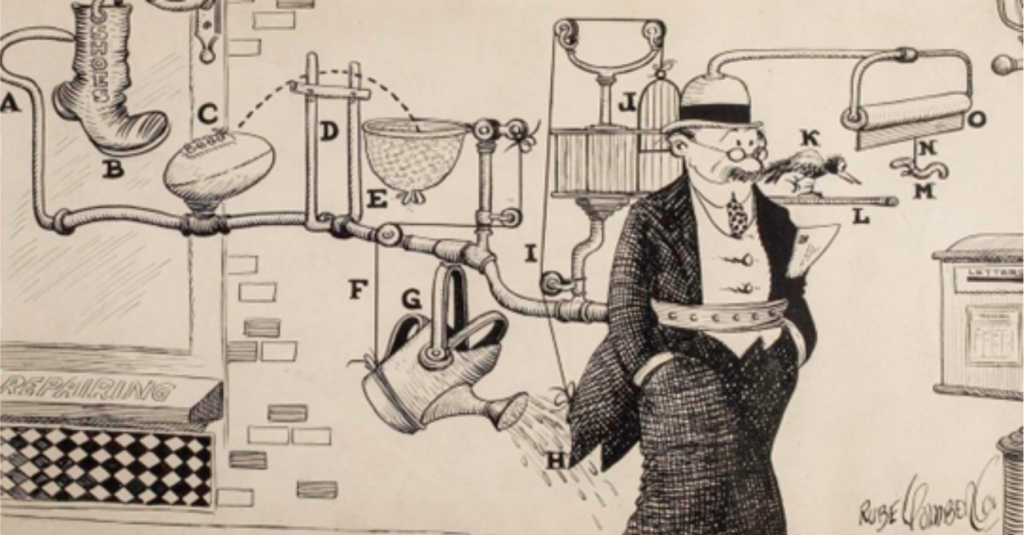
2mc 24/7 3d animation rendering blog architecture furniture rude goldberg machine


The door to the gym wouldn’t open. She sighed. It was typical really. It would start raining in a minute. The water had been shut off in her apartment since Wednesday. Ten hours in the brain-sapping heat on the archaeological dig had been hell, thanks to the site manager forgetting to bring the new gas bottle needed to run the fridge. There had been nothing cool to drink all day. The truck had broken down on the way back to town. They’d had to walk the last ten miles.

All she wanted from the gym was a hot shower. And, yes, here came the rain. She slumped to the floor, letting the rain run over her. “Wouldn’t it be nice if things just worked?” she groaned.

It is nice.

It’s nice when the coffee machine works at 4 in the morning, and you have a 12-hour shift ahead of you. It’s nice when the fire extinguisher works when it’s needed. You know what’s better? When things work perfectly the first time.

To make something work correctly the first time, takes skill, practice, and a lot of careful planning. The cartoonist, Rube Goldberg knew a lot about that. So much, in fact, that machines of a certain ilk are named after him.

What came to be known as Rube Goldberg Inventions were showcased in his cartoons. They became so famous that in the 1966 edition of the Random House Dictionary of the English Language, a ‘Rube Goldberg’ was described as having a fantastically complicated improvised appearance, or deviously complex and impractical. Impractical the machines may have been, but they were a lot of fun. You can see one in the title sequence of Elementary. Despite their seeming impracticality, what made these machines so great was that they just worked. It’s nice when things just work, isn’t it?

Honda thinks so. ‘Things’ to them, means every nut, bolt, screw, spring, piece of window glass, fan, switch. To show that every ‘thing’ within the 7th generation of the Honda Accord did work properly, first time, and every time, they created an ad entitled ‘Cog’. Every component that goes into the Honda Accord became part of a Rube Goldberg machine.

The ad was created in 2003 by Weiden And Kennedy UK. It’s often used as the benchmark of creative brilliance, and one of the most iconic ads ever made. So much so that during the Covid lockdown, ITV decided to launch a competition. It was called, ‘The People’s Ad Break’ – a dedicated ad spot where the winner’s recreated version of ‘Cog’ would be showcased. Both Honda’s version, and the winning entry, took a lot of preparation.

There’s a saying in the film industry – great pre-production means a great shoot. When you spend the time getting the pre-production right, then reaching the perfect result the first time is achievable. And that’s the goal of 2MC24Seven. Before we start your renderings, we make sure we have all the information we need from you. Armed with this knowledge, we can ensure that you will have:

  • Immaculate 3D, photo-real renderings, video, and animation within 24 – 48 hours
  • 100% brand consistency
  • Clear communication throughout, from detailed requirements, progress imagery, to final product.
  • Transparent quoting
  • Rapid project initiation
  • Client approvals throughout the process
  • A complete 24 / 7 / 365 service
  • The quickest, pre-eminent, and most seamless visual content.

Because of this, we’ve been getting it right, first time, every time for some of the world’s leading brands for the last 15 years.

If you need a 3D image, model, photomontage, animation, picture, video, or motion graphic that’s perfect for your client presentations, let’s chat. We’re available 24/7/365 so you can call us now, literally. No hanging around until your time zone matches ours!

Isn’t it nice when things just work?


Which company do you think would win the ‘Just Works’ Award and why?

Contact us:
Mobile No.:    +1 201 389 7032
E-mail:             info@2MC247.com

2mc 24/7 3d animation rendering blog architecture furniture rude goldberg machine